Latest Posts

Day 12 – Burgos

Today is as dismal as yesterday, and in the morning I decide to go straight to Burgos. There are festivities aplenty here today as they are celebrating the patron saints of this medieval city founded in the 10th century. The fiesta of San Pedro and San Pablo, known locally as the Sampedros, is a big festival that take place at the end of June and continues for a week with parades, dancing, concerts, and fireworks. I also want time to explore Burgos Cathedral and the town in general, before travelling to Bilbao early the next morning.
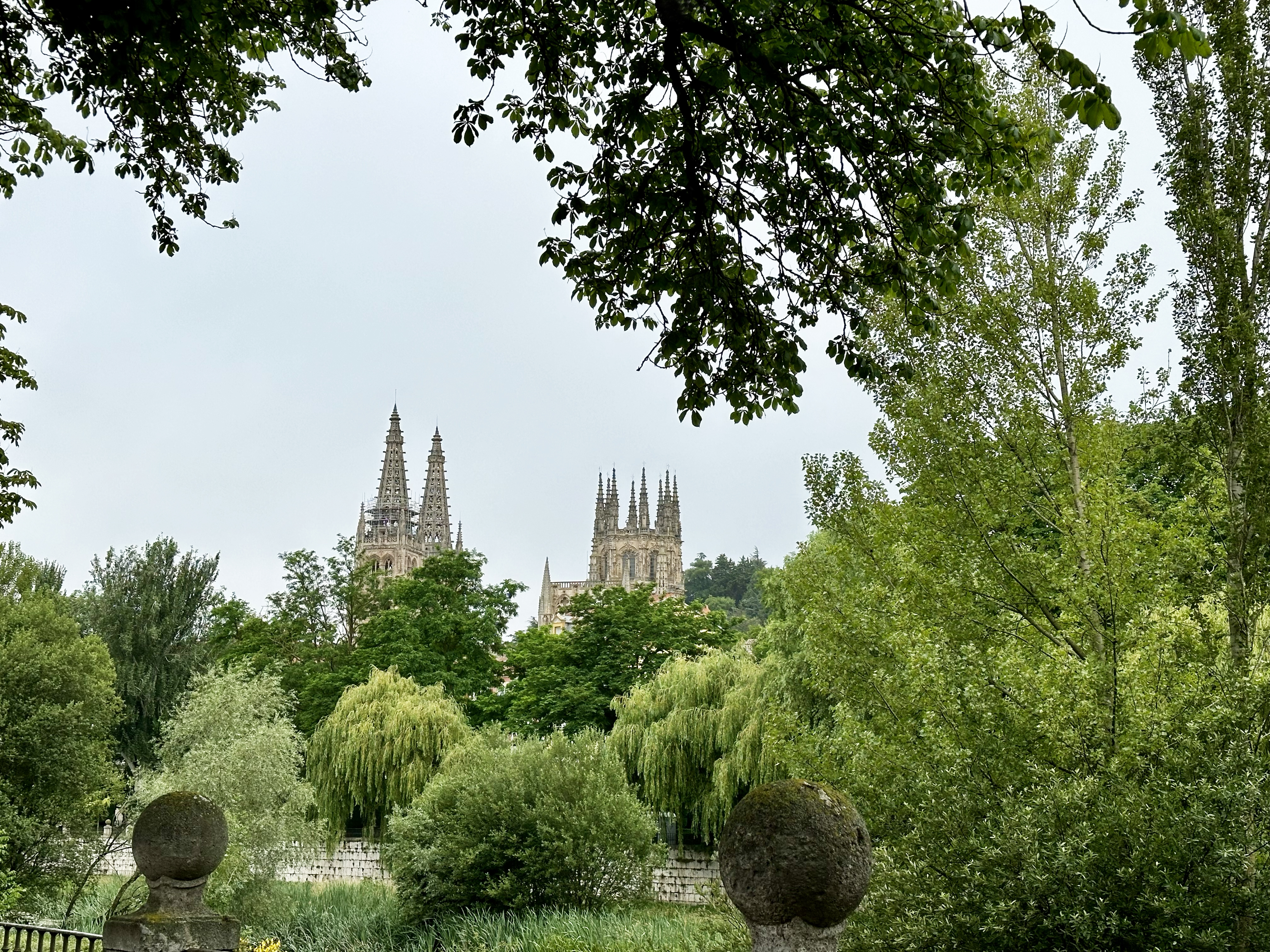
It’s a good decision. I instantly fall in love with the old town, which is where I end up spending the entire day. This is the view as I enter Burgos alongside the river.
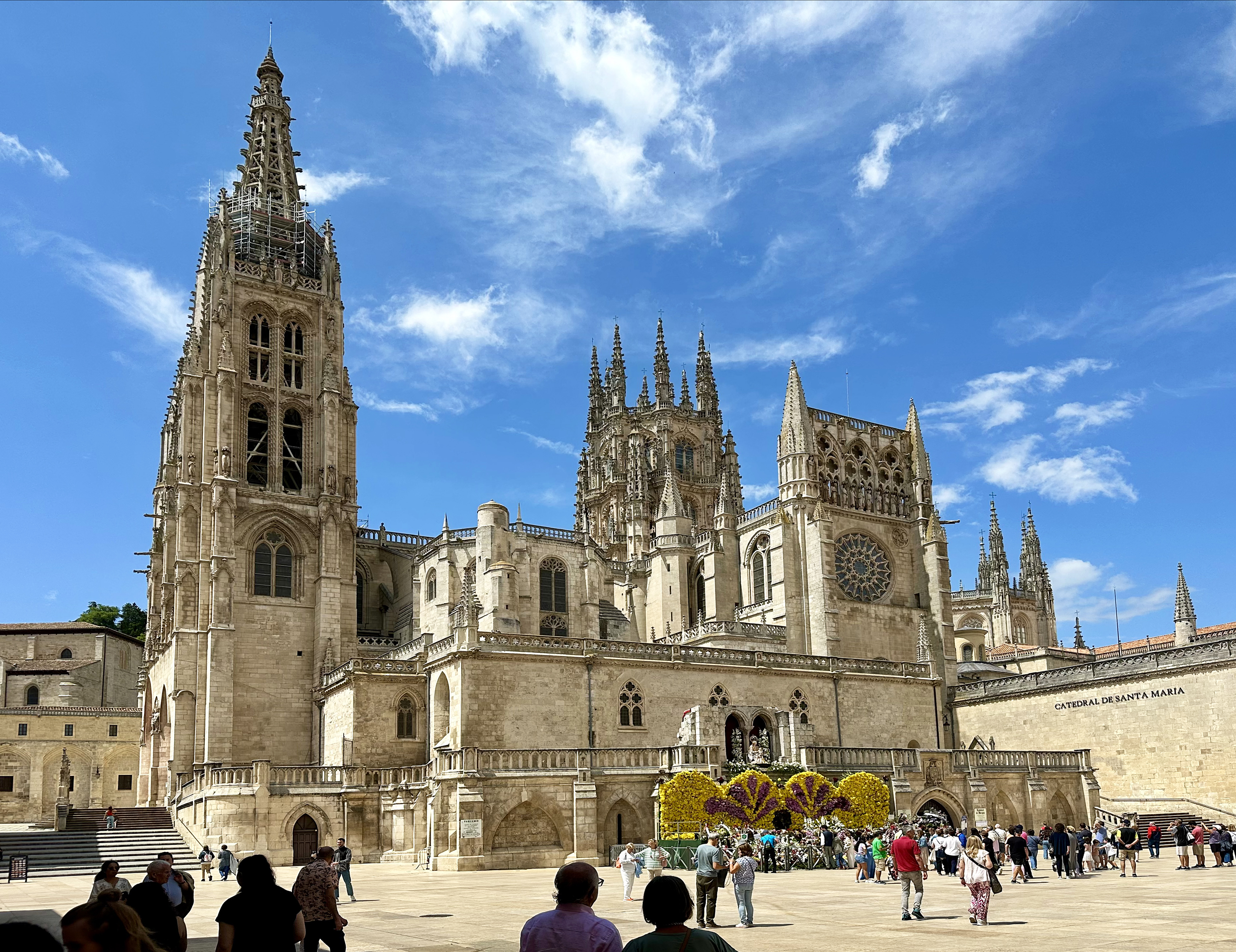
The first thing I do is visit the Cathedral of Burgos, Catedral de Santa María. The cathedral construction started in 1221, making it Spain’s first Gothic cathedral. It took about forty years to finish, and was expanded until 1765.

There is music everywhere in town and the square will soon be packed with people, as there’s going to be a concert on the terrace above the flower arrangement. I enjoy taking part in this local tradition and mingling with the locals, and I even take a short afternoon nap in the midst of them, sitting on a bench in the cathedral square, while I wait to get access to the place I will be staying. But first I go inside to visit the cathedral.

Unlike the cathedral in Pamplona, ​​this one is huge, light and airy and I’m completely mesmerised by it.

It is wonderfully ornate but it’s the soaring ceilings that capture my attention, as each ceiling is different from the other. Listen to the acoustics!

I keep craning my neck to look at the ceilings hovering high above me, with various artistic styles as the different sections were added on over the years. The one in the photo above is from the Baroque period.

Suddenly the church bells start to chime and I rush outside to the courtyard in the centre of the cathedral to listen. It’s pretty impressive and goes on for quite some time.
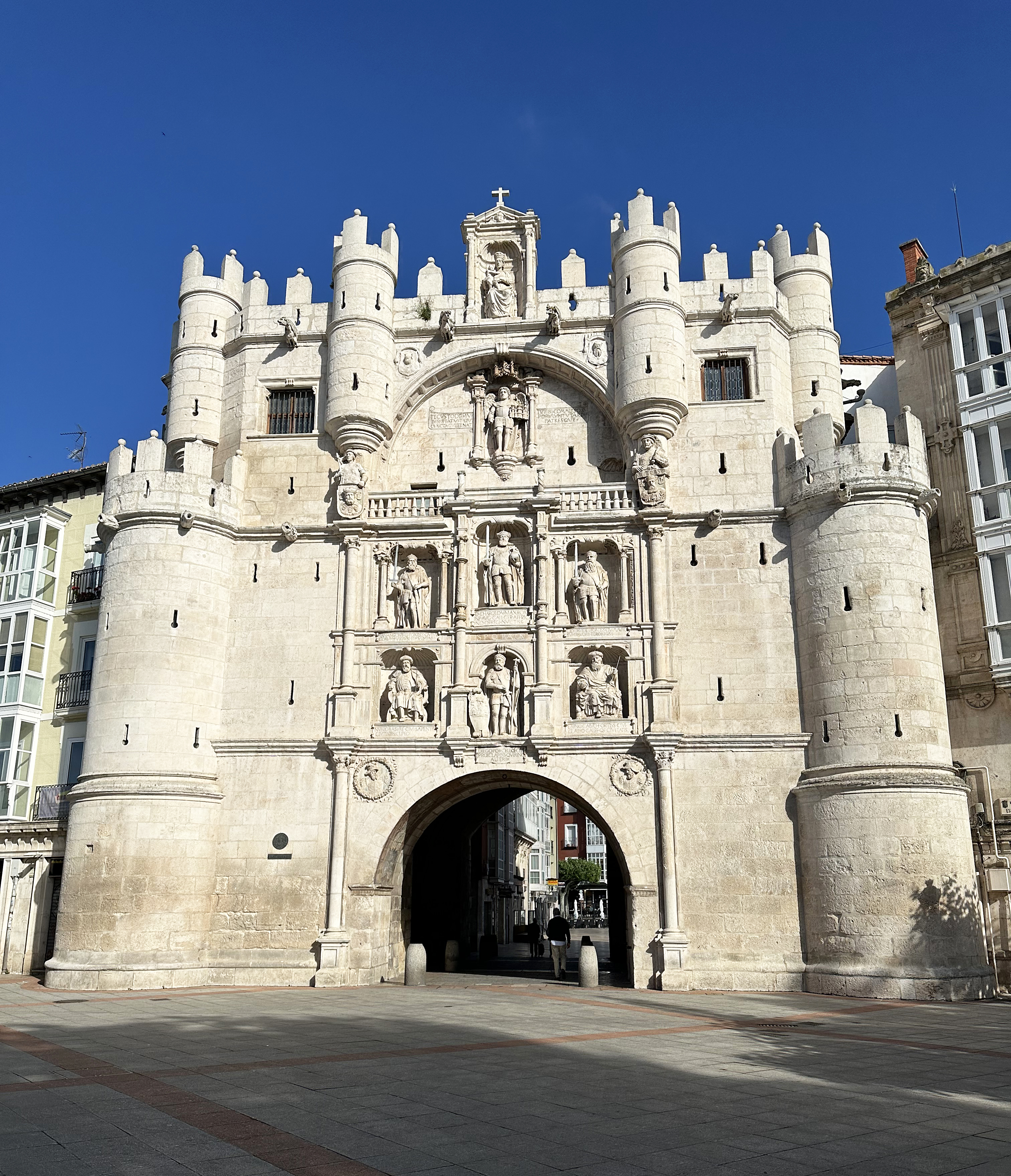
The Arco de Santa María, the gateway through the walls that surrounded the city.

The celebrations are ongoing everywhere with parades and loud music in every nook and cranny.

Outside the cathedral, two orchestras pass each other on their way to other parts of the city, each playing its own tune. It’s a festive atmosphere and everyone seems to be having fun.

Does all this feel overwhelming after the silence and tranquility of the camino, you might wonder? Absolutely not! I’m loving it! I needed to walk the camino this time because it was necessary for me to unplug, reset and reconnect with myself. Overwhelmed was how I felt before coming here. Now I feel I’ve been restored, and I’m ready to reconnect with life outside the camino again.

I indulge myself by staying in the middle of town beside the cathedral. When evening comes, the light is absolutely magnificent, with the illuminated cathedral right outside my window.

What I thought would be a quiet nook in town turned out to be completely wrong. There is a salsa concert going on in the square below, and I buy a take away and sit and watch people dance for hours.

What better way to celebrate life than to dance and be happy? I’m instantly reminded of Marcelino’s words of wisdom from when I met him outside Logroño, and smile to myself. Precious Camino! You have once again provided me with the gifts I need.

When I eventually go to bed, I even hear fireworks in the distance. What a splendid way to end my camino! With a grandiose celebration! I’m so grateful.

Check out my earlier posts to get the full context of this pilgrimage and the one I did the year before, and sign up to be notified when the next post is released. If you enjoyed this post, please give it some love by sharing and liking it!

All photos copyright Anita Martinez Beijer © All rights reserved
Day 11 – Villafranca de Montes de Oca to Atapuerca

The archaeological site of Atapuerca has rich fossil remains from the earliest humans in Europe, nearly a million years ago. It’s designated a UNESCO World Heritage Site, but I’m on my way to the village of Atapuerca, which is about 4 km away from the site.

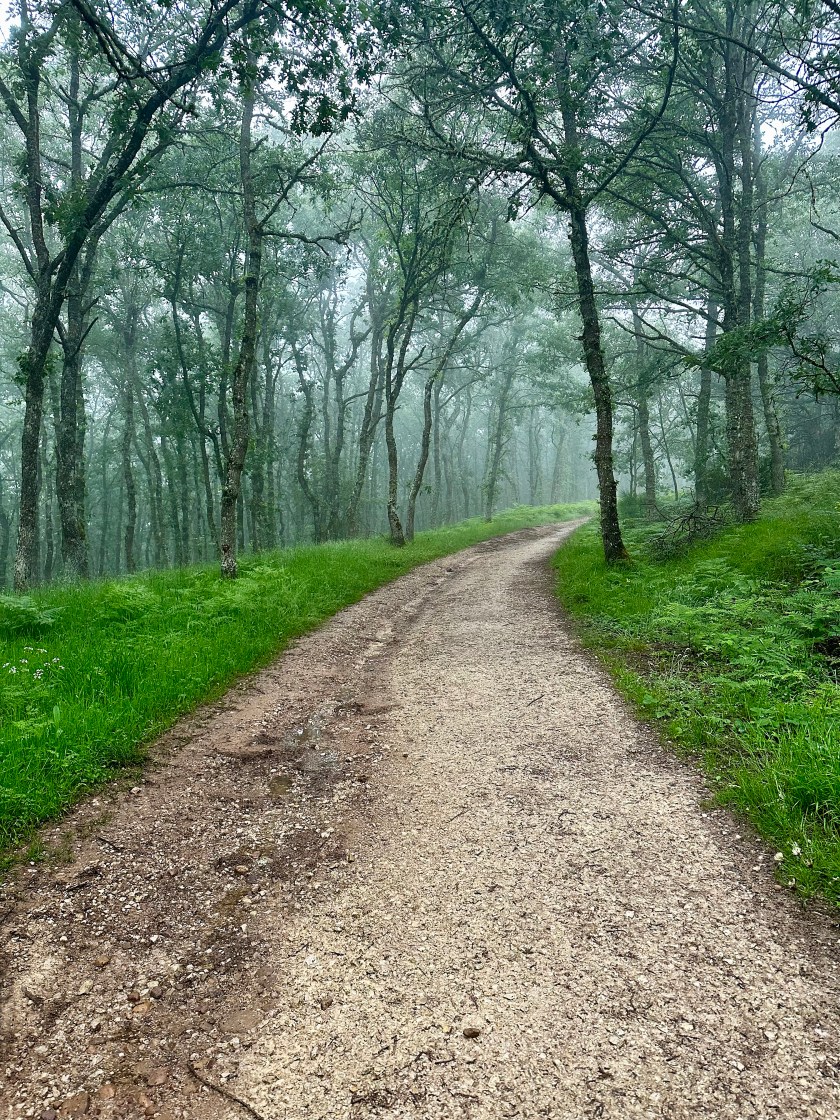
This 18,5 km walking day begins with a light drizzle and mist, and continues like this for much of the way. The path starts going steeply uphill as soon as I leave San Antón Abad and continues to climb upwards for a long time.

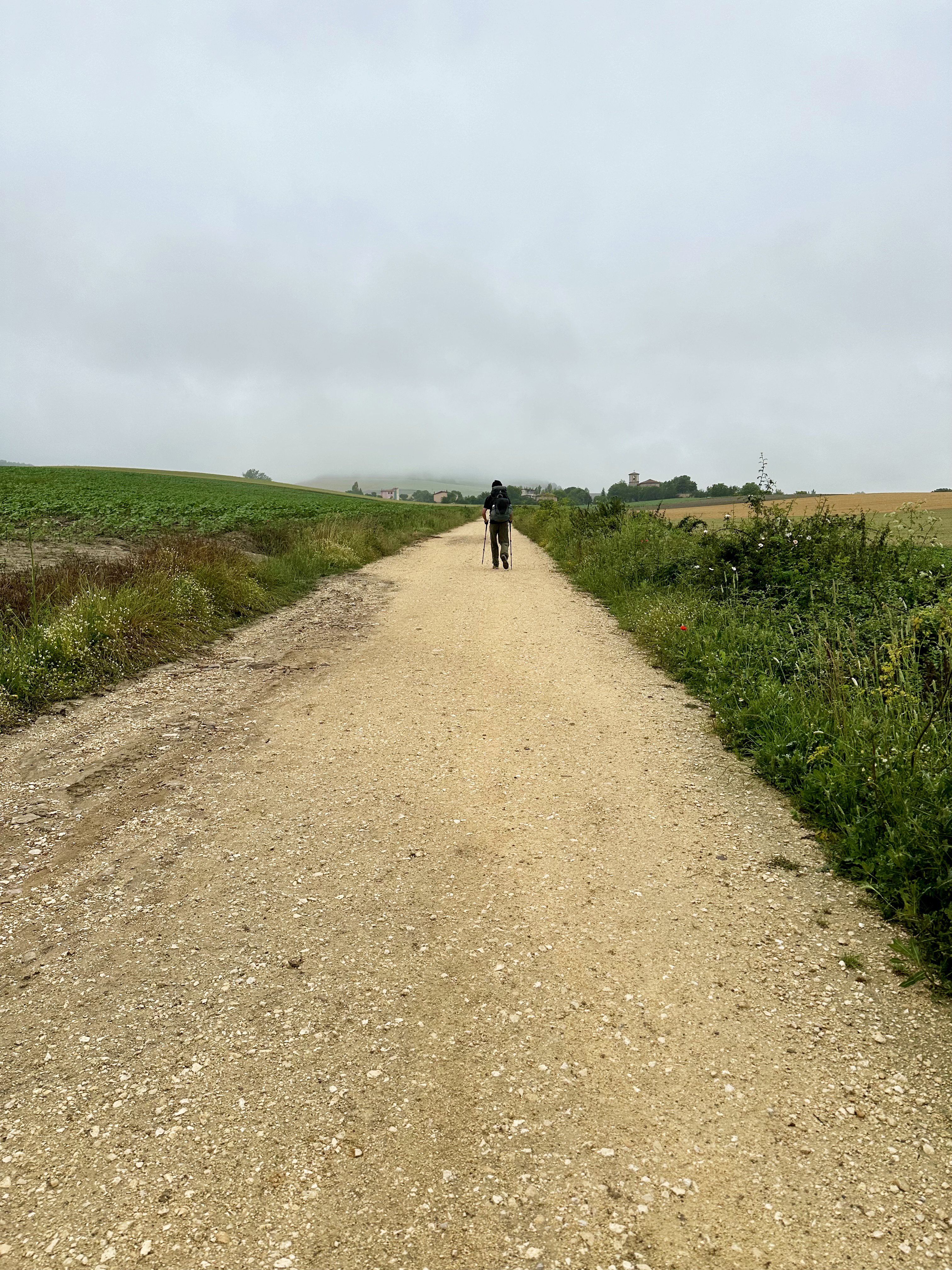
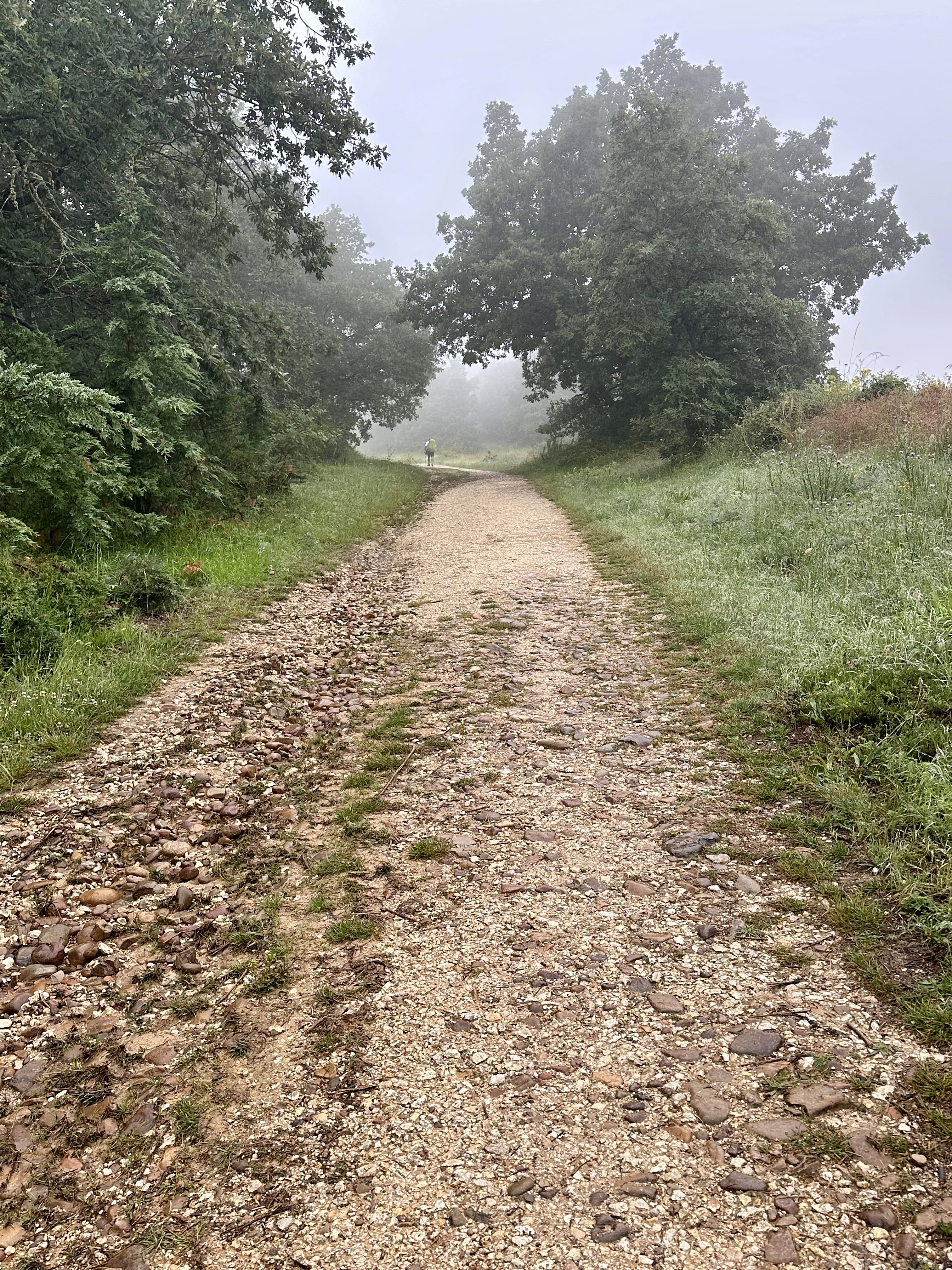
This is the only pilgrim I see occasionally, and the mist continues as we’re at 1000 meters now.

These unpopulated forests provided perfect cover for the notorious outlaws who roamed its slopes and ambushed medieval pilgrims, something I vividly can picture today…

At first the forest has a kind of eerie beauty, but the path is seemingly endless, and it’s a long, damp and lonely walk today.

Endless, endless, endless. Where are all the pilgrims today?

I arrive at San Juan de Ortega, a chapel and monastery founded in 1150, and funnily enough the somber mood continues here as well. The few I come across are subdued and there is a strange vibe here that I don’t feel comfortable with, so I have a quick coffee and sandwich and continue on my way.

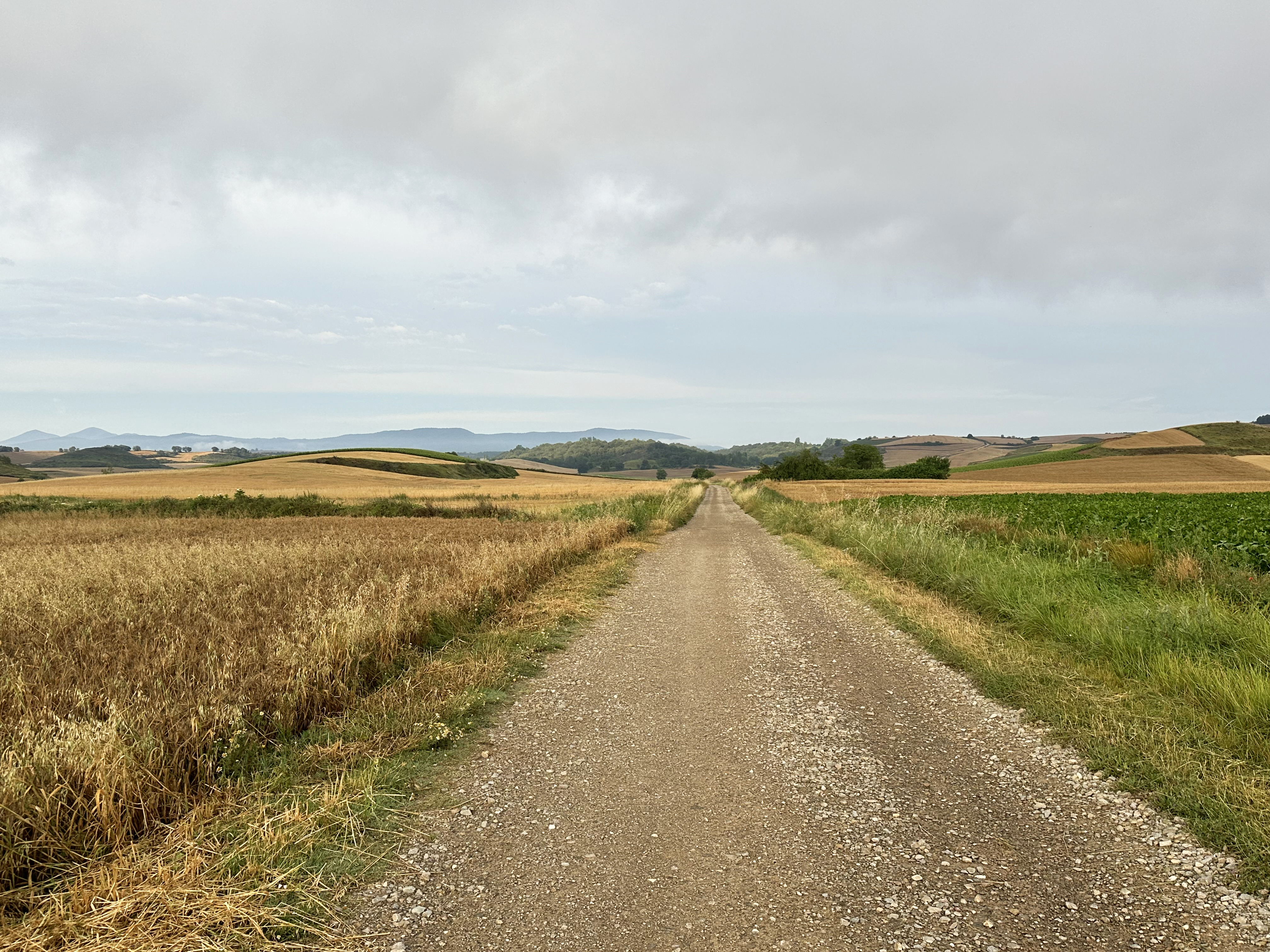
Finally the landscape opens up and I feel like I can breathe again!

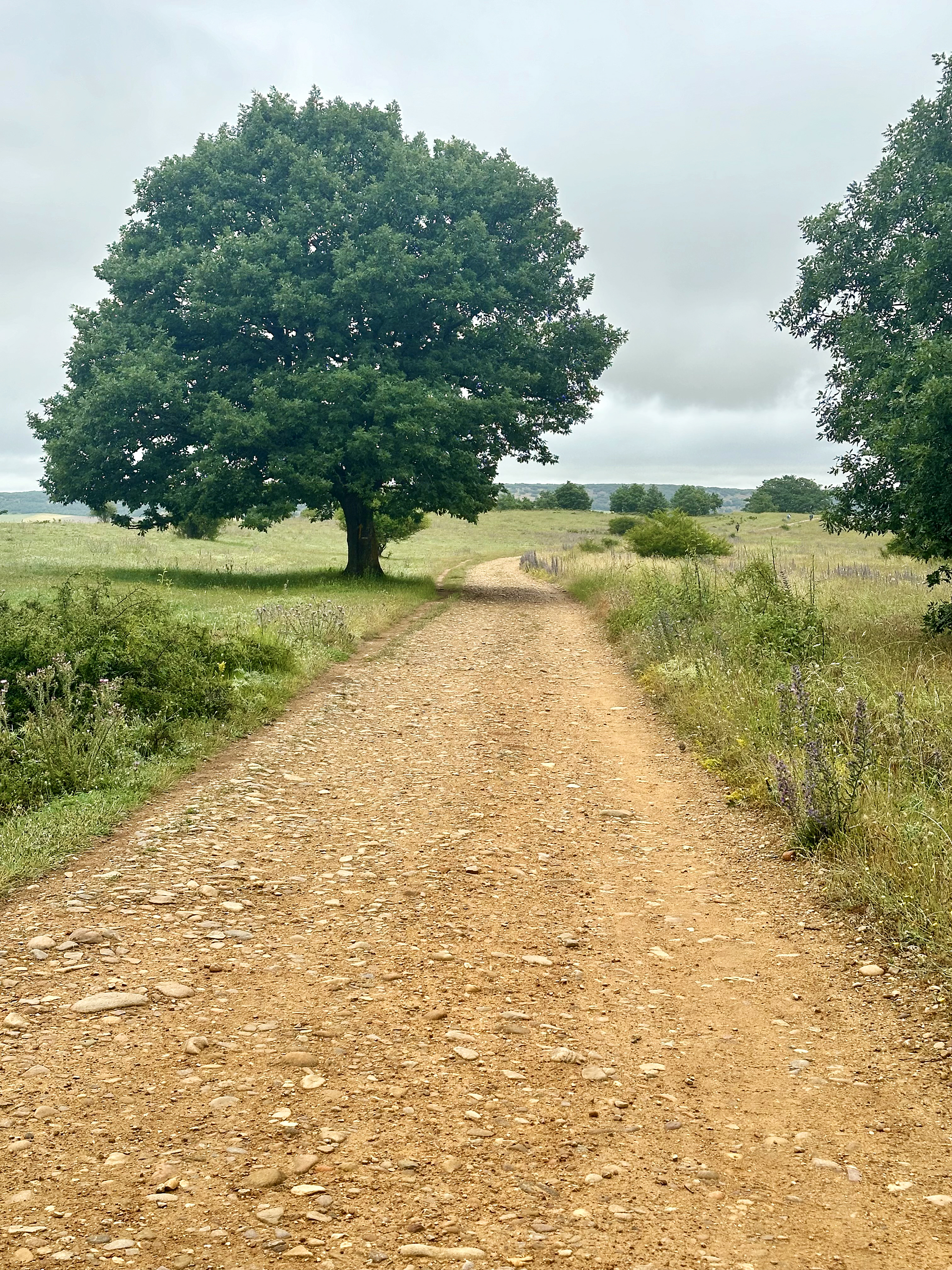
This stretch is beautiful and passes handsome old oaks.

It’s downhill now to Atapuerca, but first I have to pass the small village of Agés I see ahead.

An unusual gable of a house I pass in Agés.

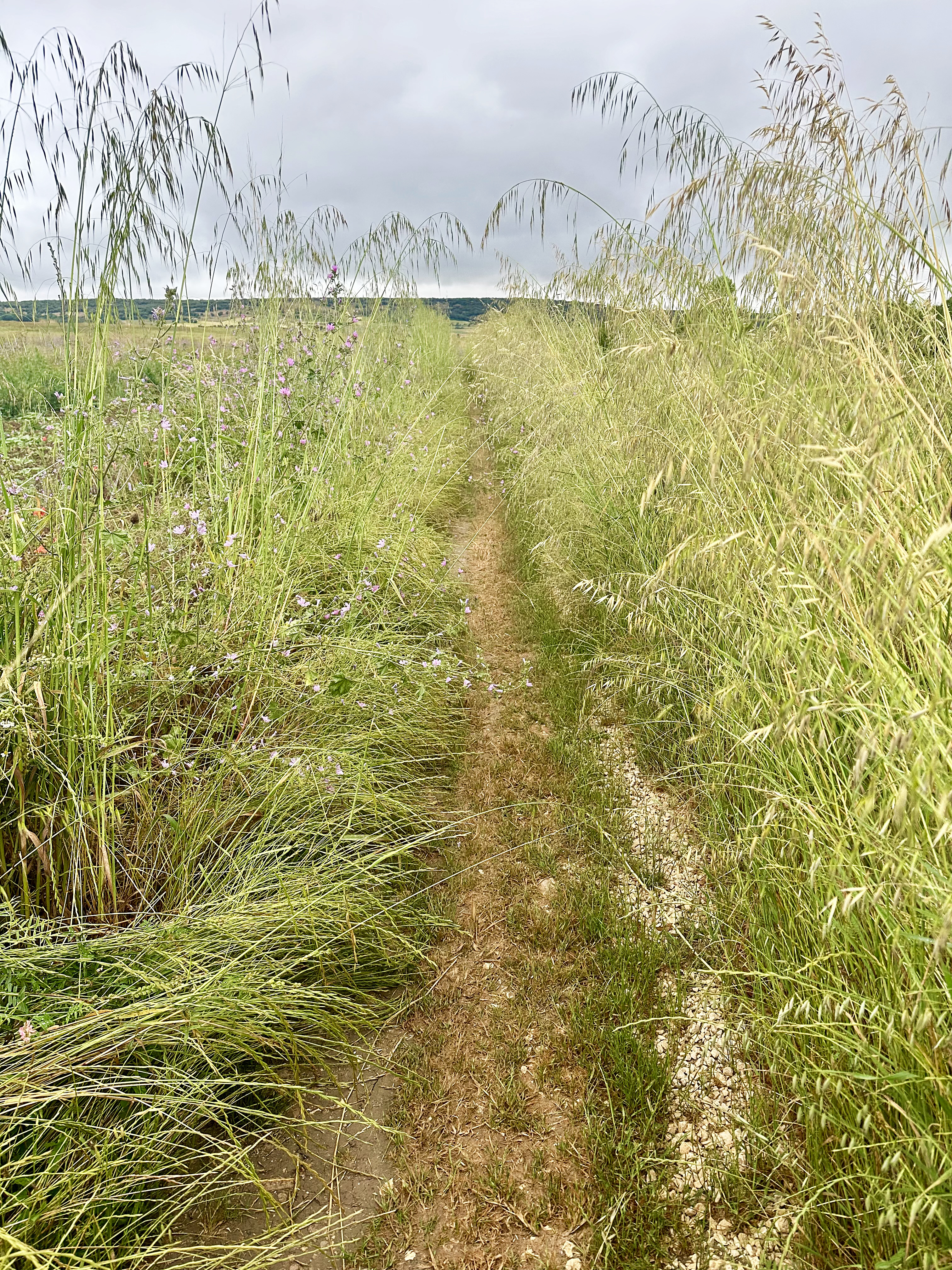
Approaching Atapuerca the path becomes unreasonably narrow, with high grass well over my height brushing my face, so I resort to walk on the road into the town.

I’m staying at a new albergue called InPulso, that has a funny chimney on its roof. It turns out to be an excellent decision. The hostess Estella opened only last month, and as a pilgrim herself she knows exactly what a pilgrim needs.

A welcoming fire burns in the huge, old fireplace with cosy sofas around it.

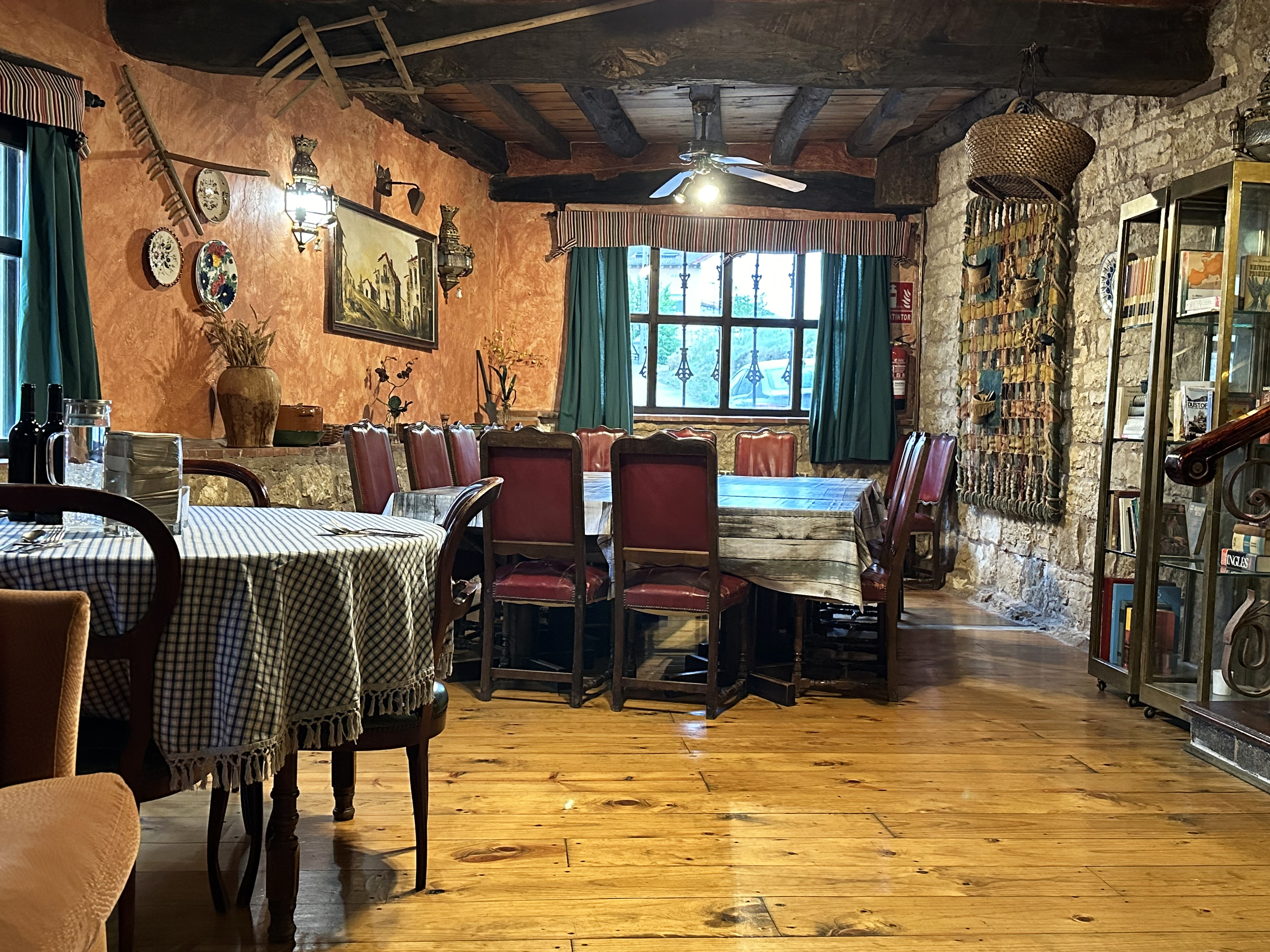
This was formerly an old inn and there’s plenty of room for the large dining table in here.

I have a nice little single room and the brand new room with showers, wash basins, toilets, and laundry facilitates is charmingly designed, and sparkling clean. Estella takes care of my clothes that are soaked through and dirty, and after my nap in the afternoon I find them nicely folded in a basket outside my door, clean and sweet smelling!

I’ve been looking forward to dining at the Conosapiens restaurant next door, but as it turns out I’m glad it’s closed, because here Estella excels again by providing homemade dinner as well. It’s delicious and the portions are generous, just what a weary pilgrim needs!

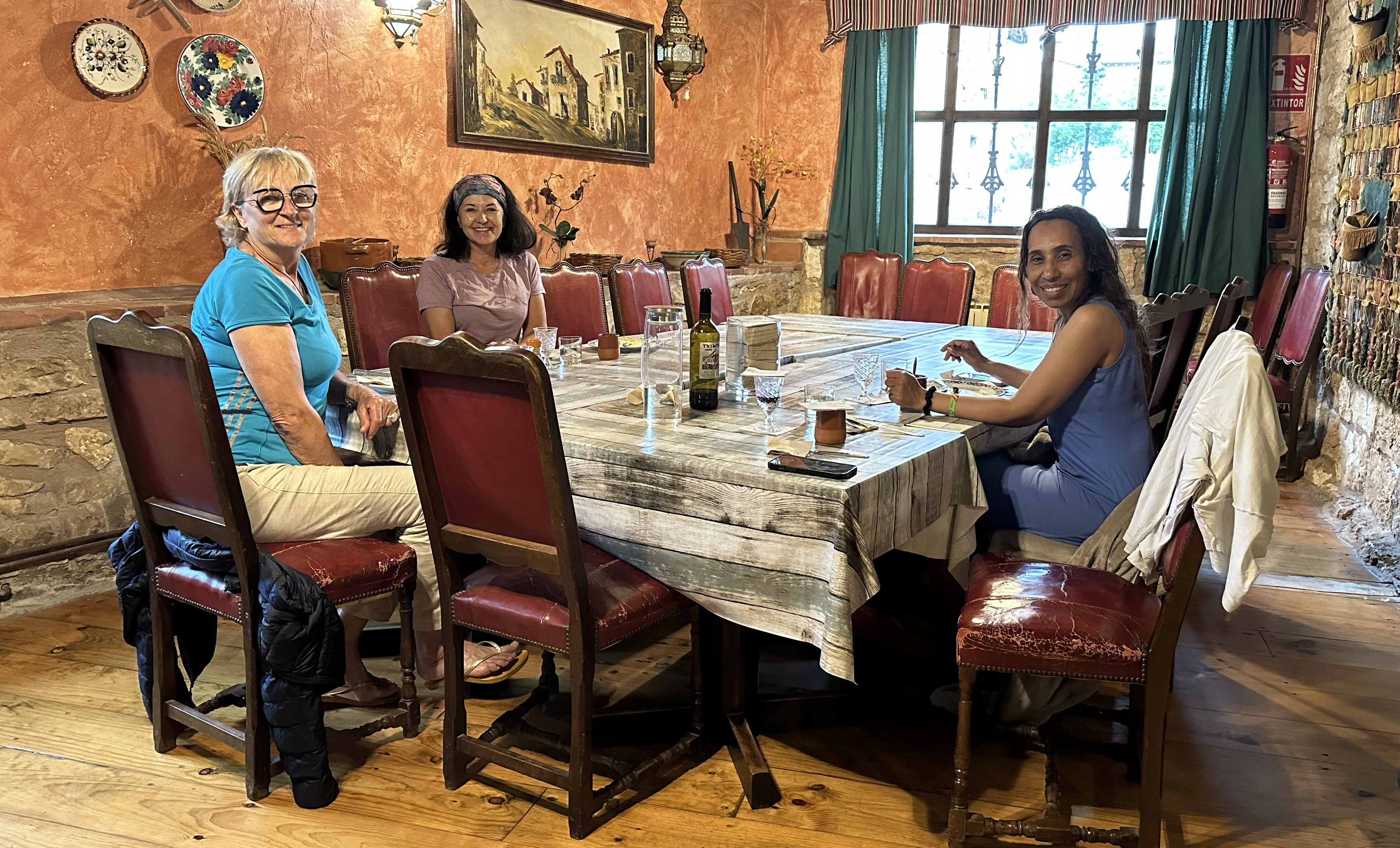
I share a table with three other pilgrims, lovely Mariela and her husband from the USA and a French lady. It feels wonderful to end this rugged day with good food, nice company, in a warm and friendly environment.

Tomorrow is the last day and final destination of my camino this year, Burgos!

Check out my earlier posts to get the full context of this pilgrimage and the one I did the year before, and sign up to be notified when the next post is released. If you enjoyed this post, please give it some love by sharing and liking it!

All photos copyright Anita Martinez Beijer © All rights reserved
Day 10 – Belorado to Villafranca de Montes de Oca

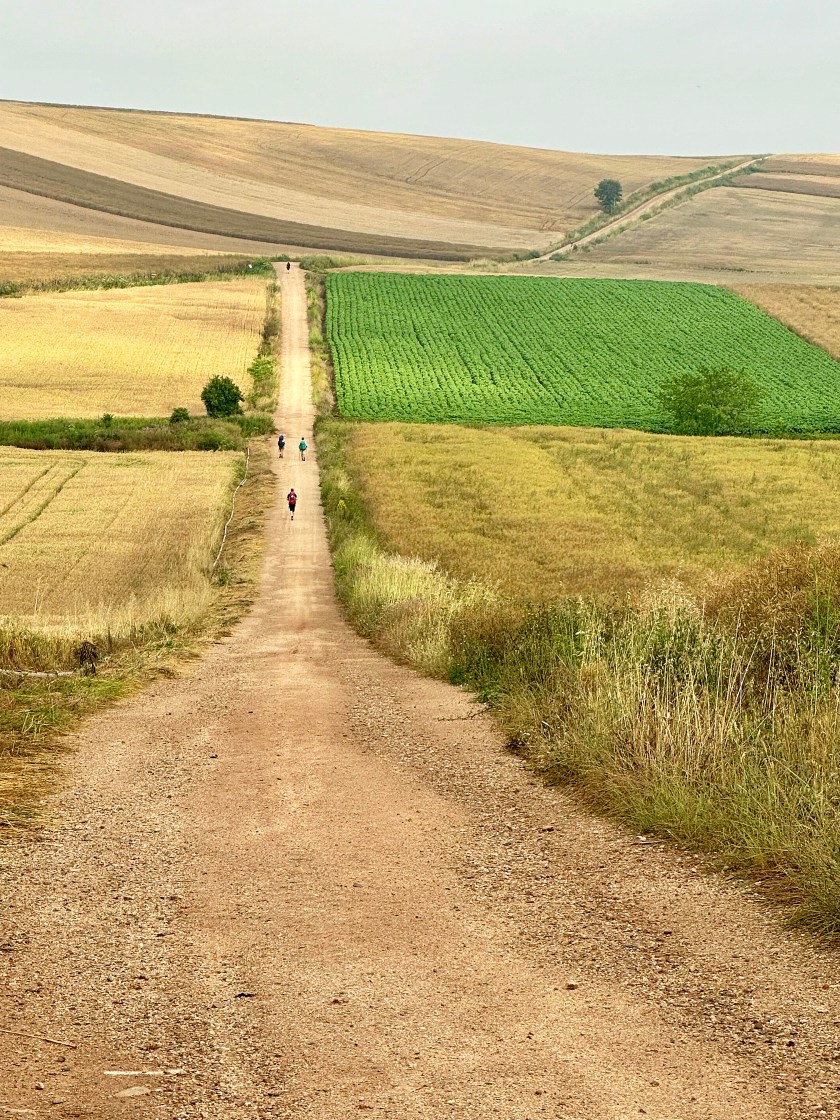
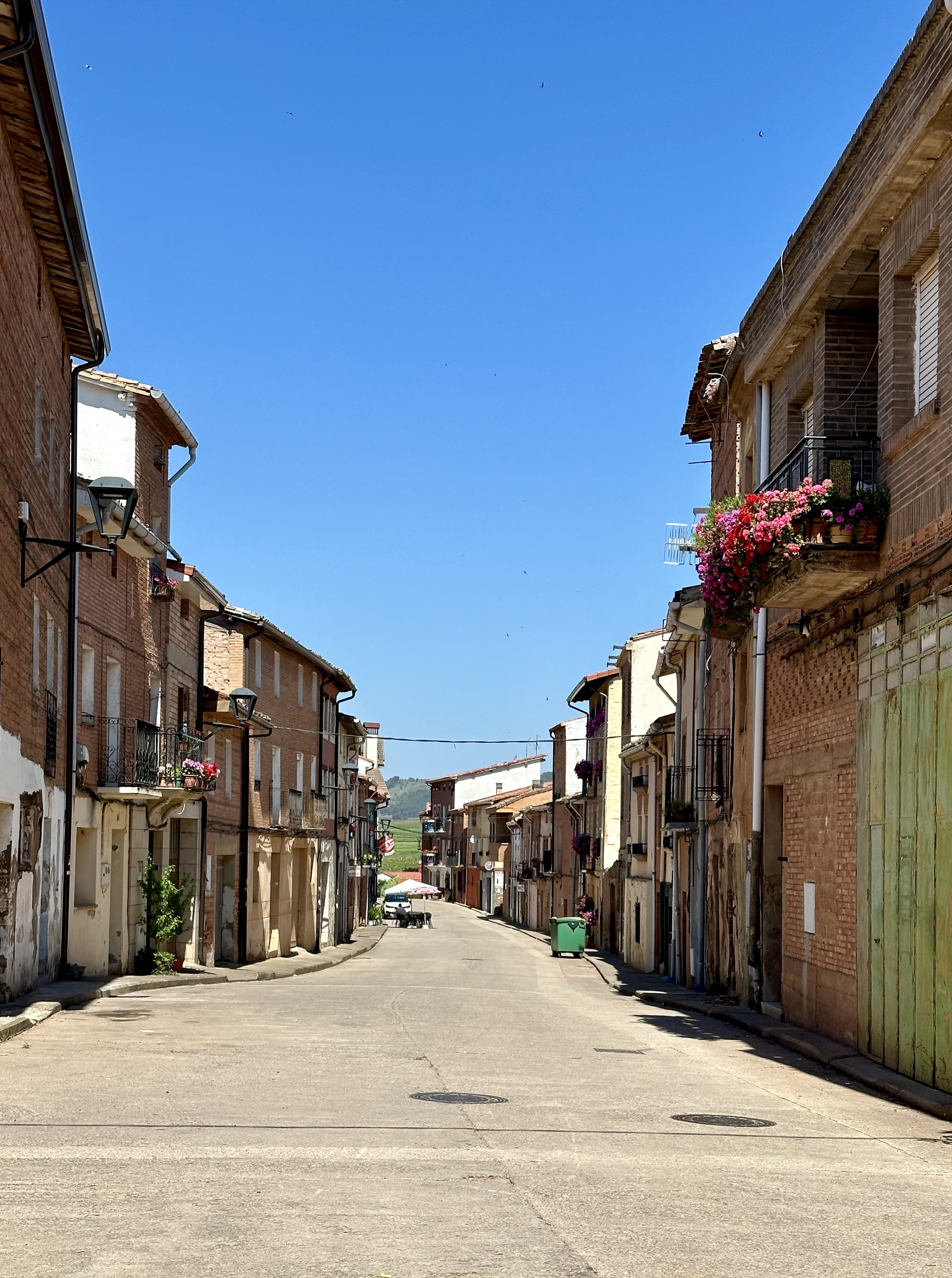
Since this is going to be another “rest day” I leave Belorado fairly late at 8 a.m. Thankfully the way, though it still runs parallel to the busy N-120, is for the most parts in the countryside on paths and earthen tracks. I can also slow down and walk leisurely. Bliss.

The church San Roque in Villambistia.

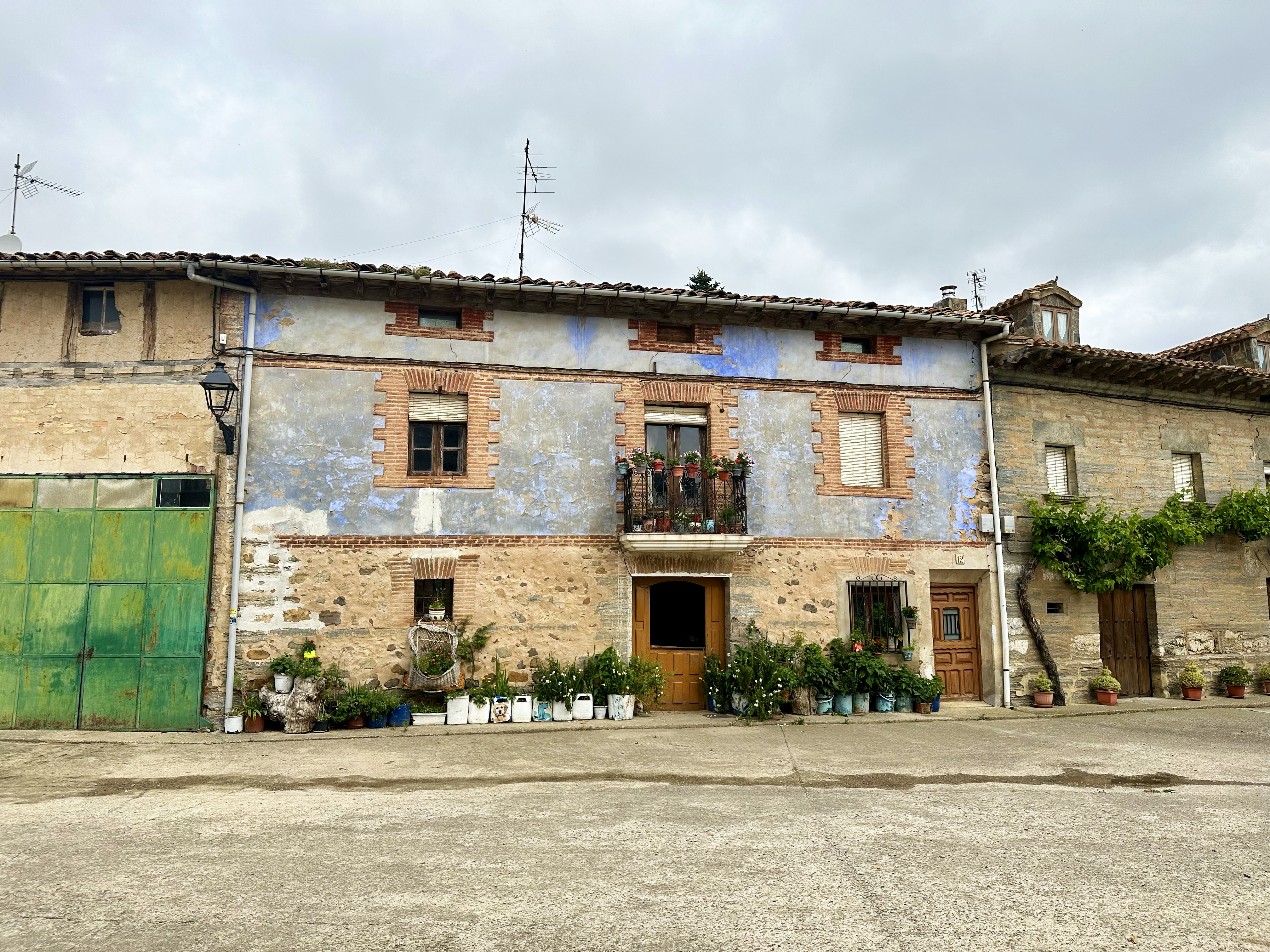
A quaint house in Espinosa del Camino.

I stop at the first café I see in Tosantos for breakfast, but if you are walking the camino I highly recommend waiting till the next village Espinosa del Camino. The café/taverna here is outstandingly good and they even serve proper homecooked food. Here I meet Johanna from Ireland, and we connect instantly, and have a really nice long chat.

After she continues on her way I stay on, as it’s only another 3-4 km to my destination. Feeling a bit chilly I go back in and inquire about something more to eat. The cook tells me he has a pot of homemade lentil soup on the stove and even invites me into the kitchen to see for myself. It looks delicious and I even get to taste it, so I have this for my lunch.

Leaving Espinosa del Camino behind me with a stomach full of food, I discover it’s nearly just as hard to walk on a full belly, as an empty. No, I take this back. It was much, much harder to walk the other day on an empty stomach. I’m enjoying the peaceful countryside and the absolutely perfect walking weather, and I don’t have very far to go now.

Instead of the noise from yesterday’s walk beside the motorway, the quietness and pretty views are like a balm for the soul.

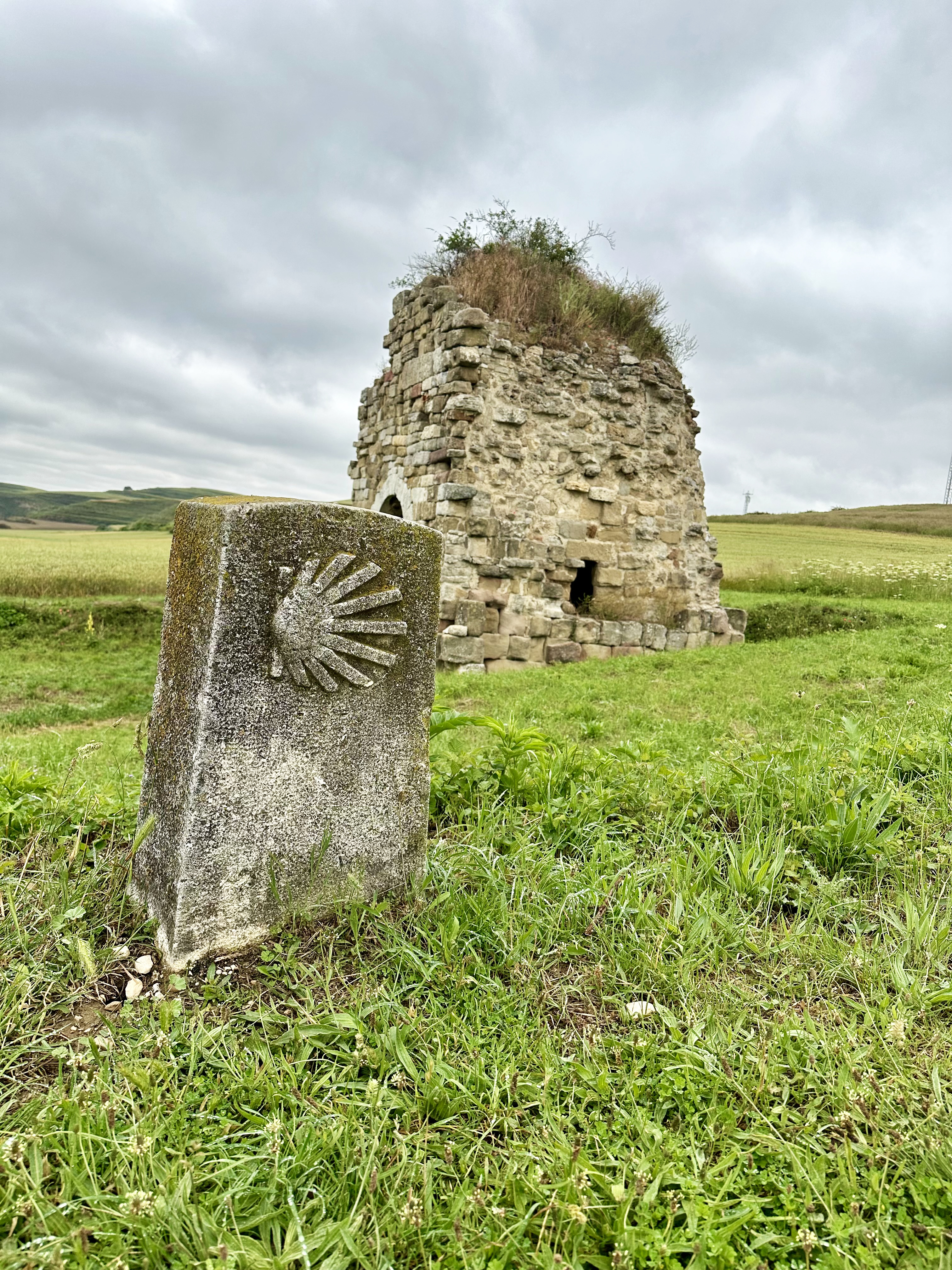
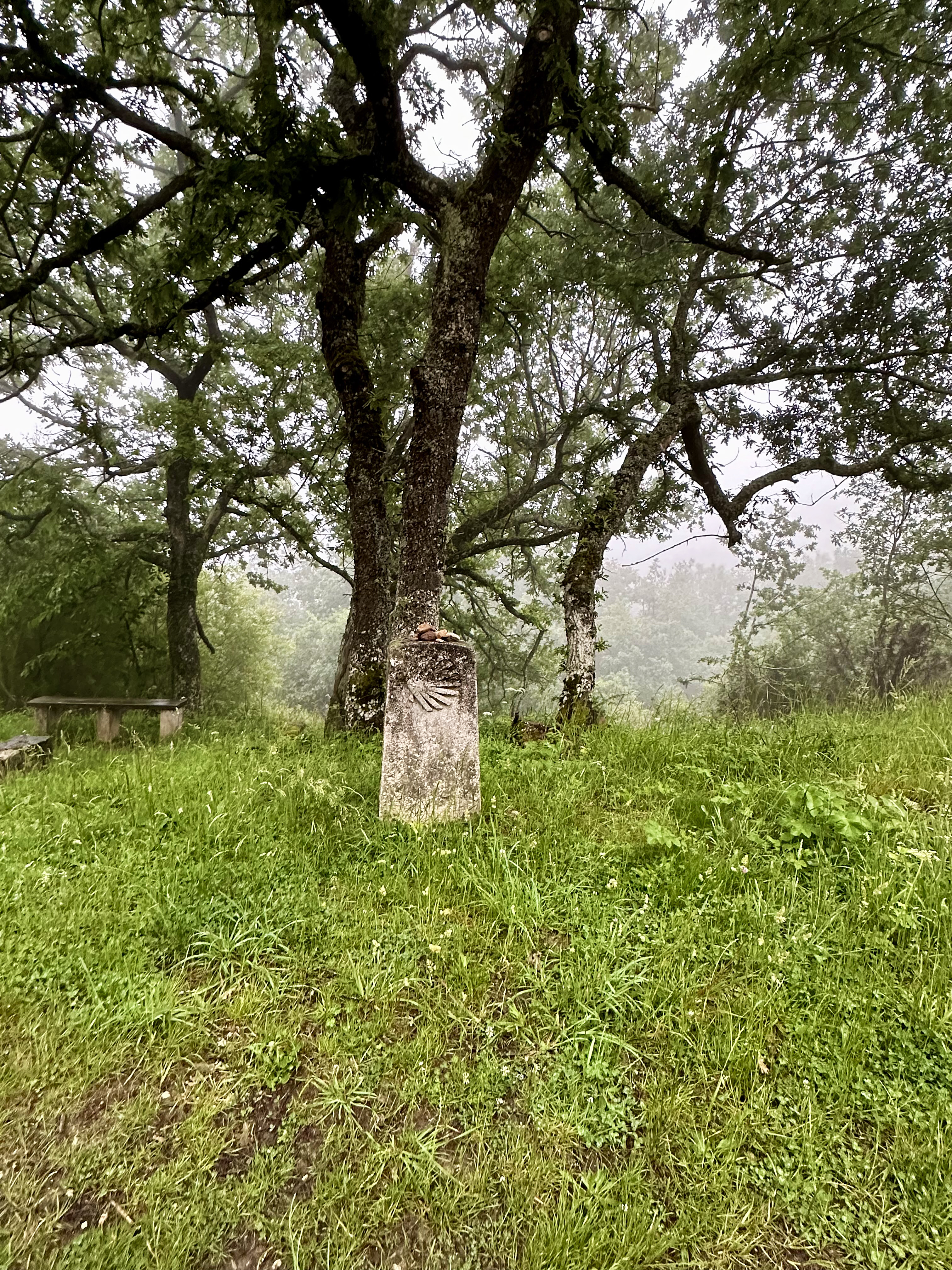
Passing the 9th century ruins of Monasterio se San Félix de Oca, with its Mozarabic horseshoe arch, with an ancient milestone beside it.

Down there is my goal for today, Villafranca de Montes de Oca, a town that has welcomed pilgrims as early as the 9th century.

The soothing sound of rippling water

I cross the river Oca and the path now narrows off the last bit up towards Villafranca de Montes de Oca. What an idyllic setting!

It then comes as an assault on my nerves to find that the N-120 runs right through this little town, and I have to be careful about sharing the road with big lorries whizzing past! Thankfully, San Antón Abad, where I’m going to stay, has large grounds and gardens around it.

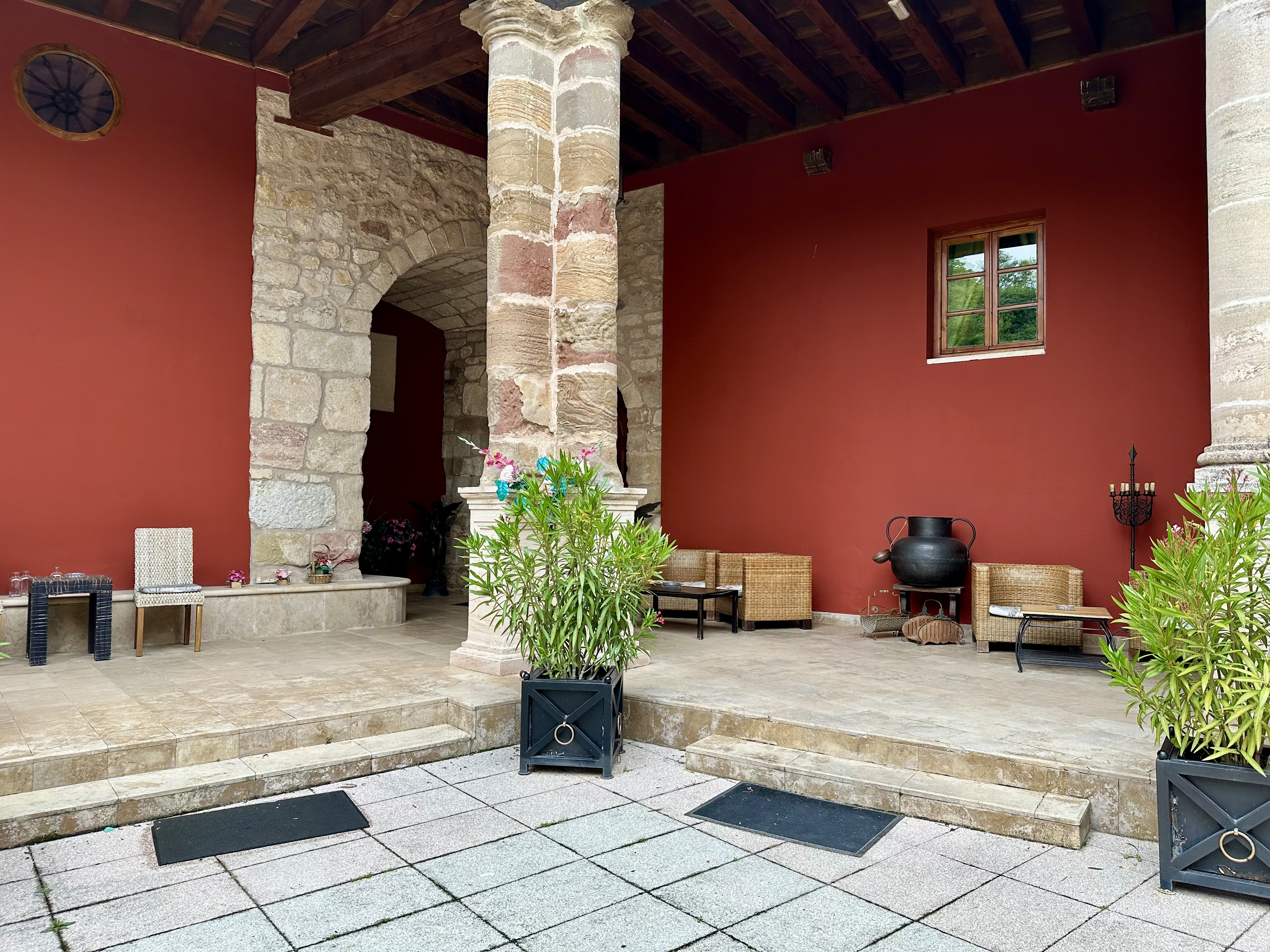
San Antón Abad, a grand old stone building, was formerly a hospital for pilgrims. Today it’s both a hotel and an albergue, as the owner of the hotel has travelled the camino himself and wanted to ‘give something back’ to the pilgrim community.

The church of Santiago in the evening sunshine just outside my window. The town Villafranca Montes de Oca is situated at the foothill of the mountain Montes de Oca. The word Oca in Spanish means goose, so the goose theme is still present.

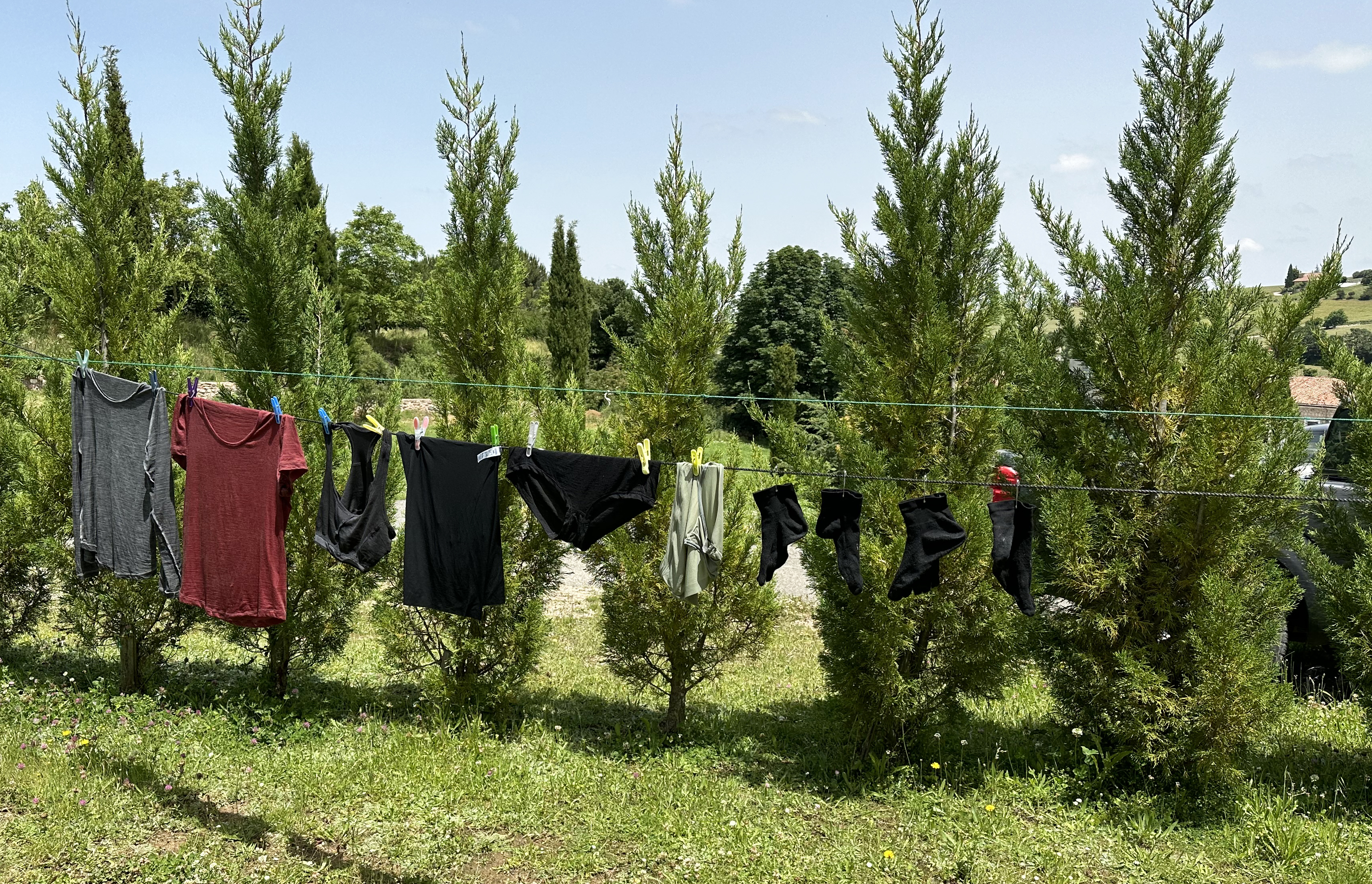
This is my rest day, and I’m happy to have a large garden at the back to hang my clothes to dry after washing them, while I have an afternoon siesta.

I go down to the dining room for dinner, and in no time at all I’m sitting at a table with the fellow pilgrims Margarita and her daughter Abby from Colombia, Brigitte from the Netherlands, and Ksenija from Croatia. We have a wonderful dinner together and laugh a lot!

Margarita has seen a poem about the Camino written on a wall on the way here, which she kindly shares with us. This is my translation.

Dust, mud, sun and rain
is the Camino de Santiago.
Thousands of pilgrims,
and more than a thousand years.

Pilgrims, who calls you?
What hidden force attracts you?
Neither the field of stars,

nor the great cathedrals.

It is not the bravery of Navarre
nor the wine of La Rioja
nor the Galician seafood
nor the Castilian fields
.

Pilgrims, who calls you?
What hidden force attracts you?

Neither the people of the road,
nor the rural customs.

It is not history and culture,
nor the rooster of the Calzada,
nor the palace of Gaudí
nor the castle of Ponferrada
.

I see everything as I pass by,
and it is a joy to see everything,
but the voice that calls me,
I feel much more deeply
.

The force that pushes me,
the force that attracts me,
I cannot explain it myself,
only the one above knows
.

This poem resonates with me, because I too have felt this force that pushes me, a deep calling I can’t explain myself. What a wonderful way to end the day, with new friends around a table of food and wine. I am grateful. Tomorrow I’m walking to Atapuerca. Will you follow me there?

Check out my earlier posts to get the full context of this pilgrimage and the one I did the year before, and sign up to be notified when the next post is released. If you enjoyed this post, please give it some love by sharing and liking it!

All photos copyright Anita Martinez Beijer © All rights reserved
Day 9 – Santo Domingo de la Calzada to Belorado

Today is overcast and humid and it feels great to walk, because by now my body is used to walking longer distances with the backpack. It took about a week, as they say.

The road today runs for large parts along the busy N-120 highway, and in one place even weaving through ongoing road works. I had to step through mud with bulldozers, trucks, and men wearing helmets and yellow safety vests! Not exactly the idyllic setting from the last few days…

At one point as I approached Grañon, I hear a strange sound and look up. It’s a paraglider flying over the fields with the help of a motor, and he swings by and waves to me and this cheers me up!

After an hour and a half I reach Grañon. This village is the only one that is some distance from the busy N-120 road, which gives it a peaceful setting.

It’s wonderful to sit in the shade of the tree and have breakfast, and watch the other pilgrims slowly approaching on the long uphill I’ve just walked.

There is a man sitting at the next table and it turns out to be Javier, the owner of the food truck I bought my breakfast from. His mother lives here, he tells me, and I guess he’s discovered the perfect spot to have a lucrative business, since just about every pilgrim stops here.

Leaving Grañon on the other side of the village.

The lovely sound of the swallows darting around the church in Redecilla del Camino, but also the sound of the busy road is never very far away.

Quaint house in Catildelgado.

Houses I pass in Vilamayor del Río, where I stop for a while and have a second breakfast. We have left the region of La Rioja, and are now in Castilla y León, the largest autonomous community in Spain by area.

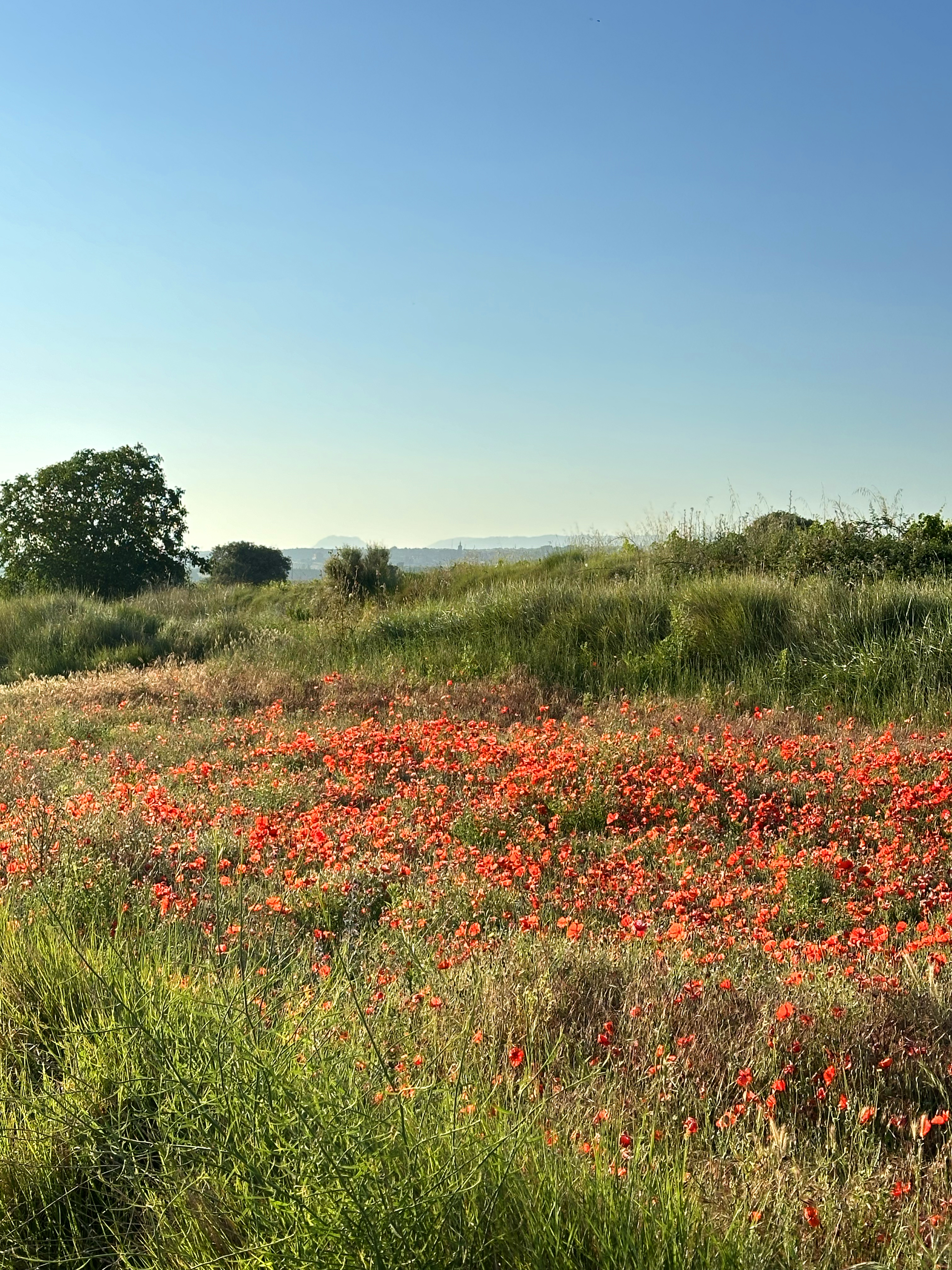
Walking the camino is very much about the mindset you choose to have. Which do you think you would focus on? The heavy traffic on the motorway on the right, or the early summer flowers and the view over the fields on the left? Sound on please!

After five hours and 45 minutes I arrive in Belorado. The hostel I’m staying in is in the blue house on the right.

Hostal B is the name of this private albergue, and I’m staying right at the top under the beautiful rafters. Even though it’s an open dorm, they’ve created low partitions, which makes it feel cozy and more private, and the cotton sheets and pillowcases are an added luxury.

Belorado is another delightful town I’m pleasantly surprised by. This is the church of Santa María y San Pedro.

Resting in the shade of the plane trees in the town square.

For dinner I go to the albergue next door, the Albergue Cuatro Cantones, that has an excellent restaurant. Here I meet Maureen from Ireland and we hit it off immediately. We shared a table with Julie from France, and I have the best meal I’ve ever had on the camino. For starters I have a delicious cold Gazpacho with Iberia ham and croutons, followed by a savoury hake in a tasty tomato sauce, and for dessert a scrumptious chocolate mousse. What a feast! If you ever find yourself in Belorado, this is the place to eat for sure! And what a wonderful way to end the day, to share a meal and have an inspiring conversation with newfound friends.

Tomorrow I’m having a rest day, which means I will only walk for 12 km. From Belorado to St. Juan de Ortega it’s pretty much uphill and downhill as we pass three mountains; Alto Mojapán, Alto Pedraja, and Alto Carneo, and I have chosen to stop just before the first really steep incline in Villafranca Montes de Oca. Why don’t you follow me there?

Check out my earlier posts to get the full context of this pilgrimage and the one I did the year before, and sign up to be notified when the next post is released.

All photos copyright Anita Martinez Beijer © All rights reserved

Day 8 – Azofra to Santo Domingo de la Calzada

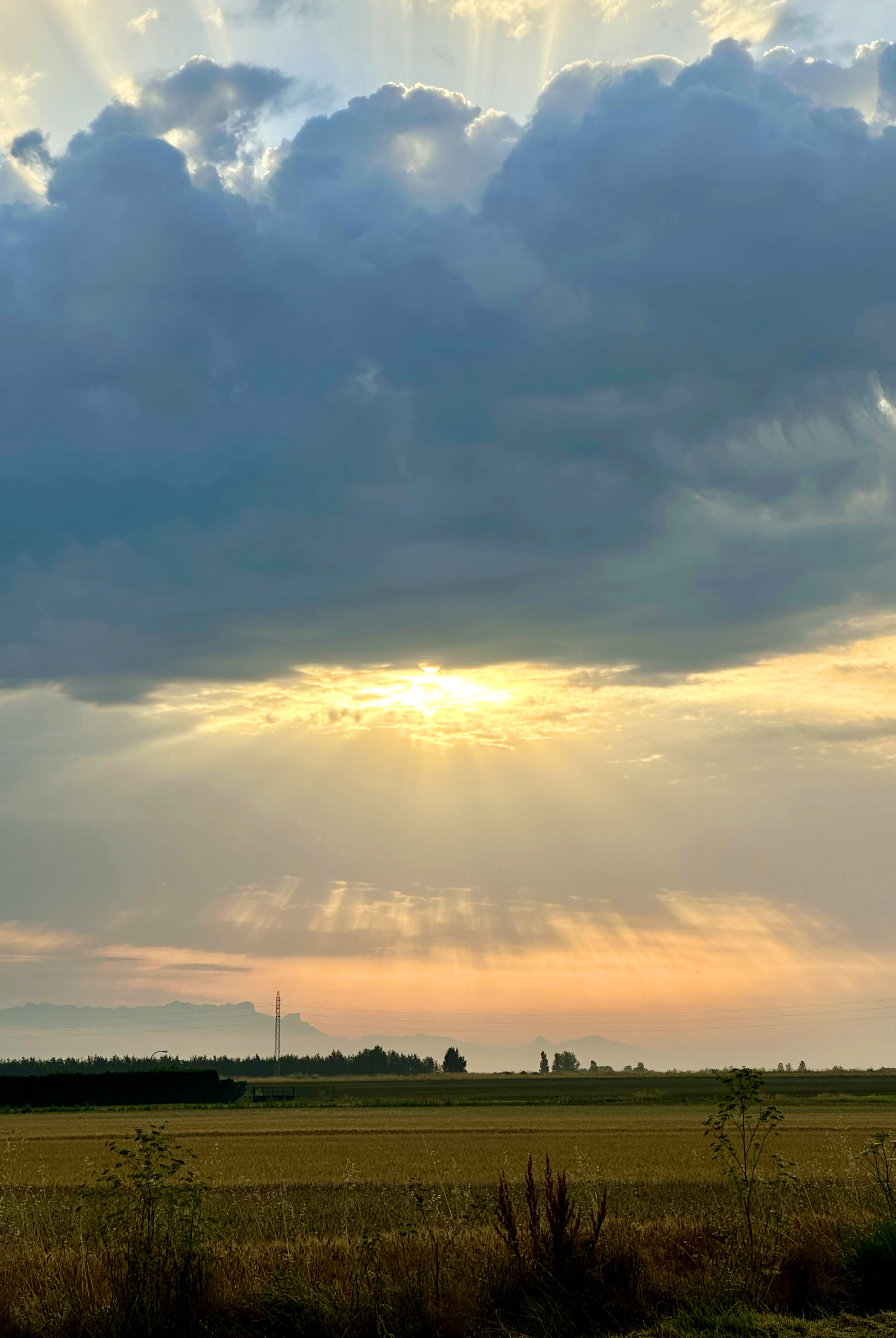
This is a “rest day” for me, as I will only walk 15.4 km. I’ve made a conscious choice to have a few of these to explore the new place I’m coming to, wash clothes that have time to dry for the next day, and simply just to give my body a break and allow myself to rest. Leaving Azofra I’m greeted by one of the few sunrises I see this year. It was one of the highlights last year, and the reward of early mornings to escape the heat in the afternoons.

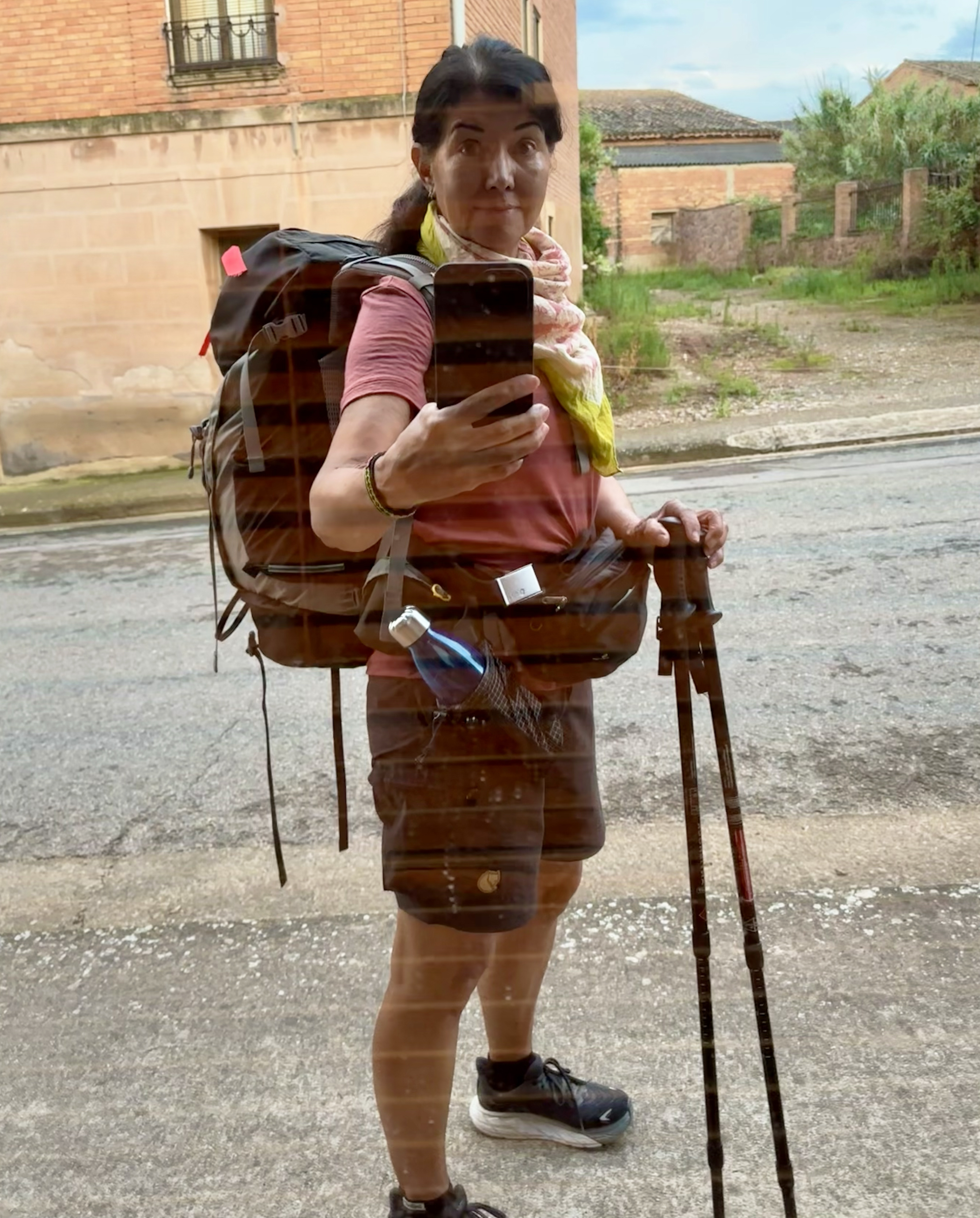
Self-portrait with a mirror window, showing the sum of my kit. My backpack weighs 6 kg and with a full water bottle and my fanny pack I carry almost 7 kg. This after I have chased every last gram and only brought the bare essentials.

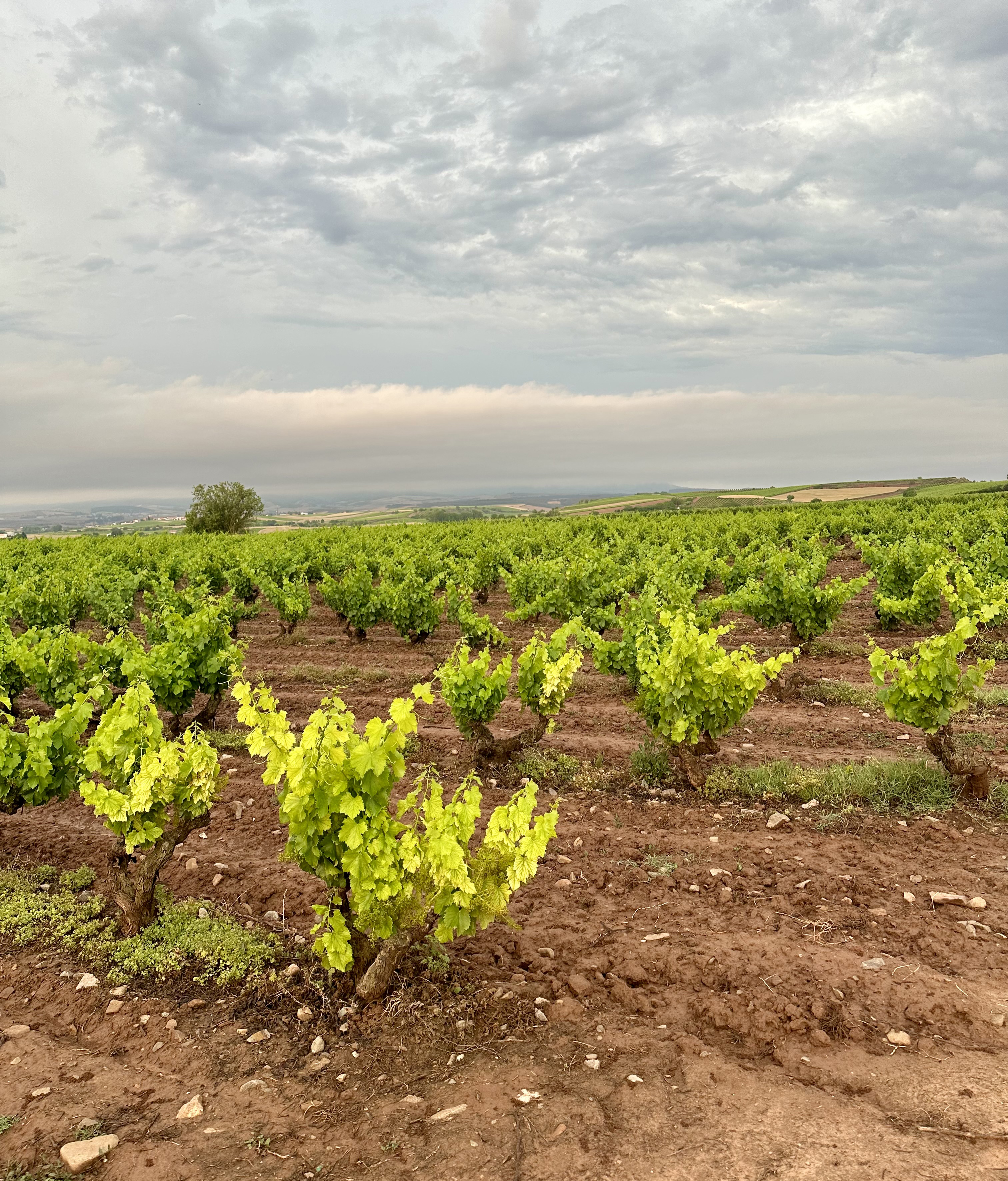
Vines in the early morning sun.

I’m out the door by 6:45 and aim to stop in Cirueña for breakfast. However, Cirueña turns out to be a ghost town and the café by the golf course is closed. There should be another one but I can’t find it, even though I go back and search for it, so I continue.

Unfortunately it turns out there is no other village or café to be found before Santo Domingo, but the scenery is lovely.

Luckily, today’s hike is only 15.4 km, but with that said, it’s really, really hard to walk that distance on an empty stomach, except for a banana and a juice.

Finally, after four hours of nonstop walking I arrive at Santo Domingo de la Calzada, and I fall into the first café I see, completely knackered. I swipe two glasses of freshly squeezed orange juice and then I savour a café con leche and a tortilla. Never has a breakfast tasted so good!

When I regain my strength I’m ready to explore this pretty town, and I like everything I see.

The cathedral of Santo Domingo de la Calzada.

Parador de Santo Domingo de la Calzada. This is a former hospital building from the 12th century, now apparently a posh hotel.

This ancient town is a pleasant surprise and I enjoy walking around and looking at the historical buildings as well as seeing the daily life that unfolds around me. It’s named after the saint Santo Domingo, Saint Dominic of the Road, who dedicated his life to improve the physical route for pilgrims in the 11th century.

I’m staying in a small hotel, and I’m very glad it has a good restaurant, as a thunderstorm breaks early in the evening, and the rain is lashing down. I eat a hearty dinner before tucking in for an early night.

Tomorrow will be a 23 km walking day as my next destination is Belorado, and I’m happy to see that there will be plenty of places to stop for refreshments. It may seem like I’m obsessed with eating, but walking long distances every day burns well over 2,000 calories a day, so you need a lot of fuel along the way. Why don’t you follow me there?

Check out my earlier posts to get the full context of this pilgrimage and the one I did the year before, and sign up to be notified when the next post is released. If you enjoyed this post, please give it some love by sharing and liking it!

All photos copyright Anita Martinez Beijer © All rights reserved
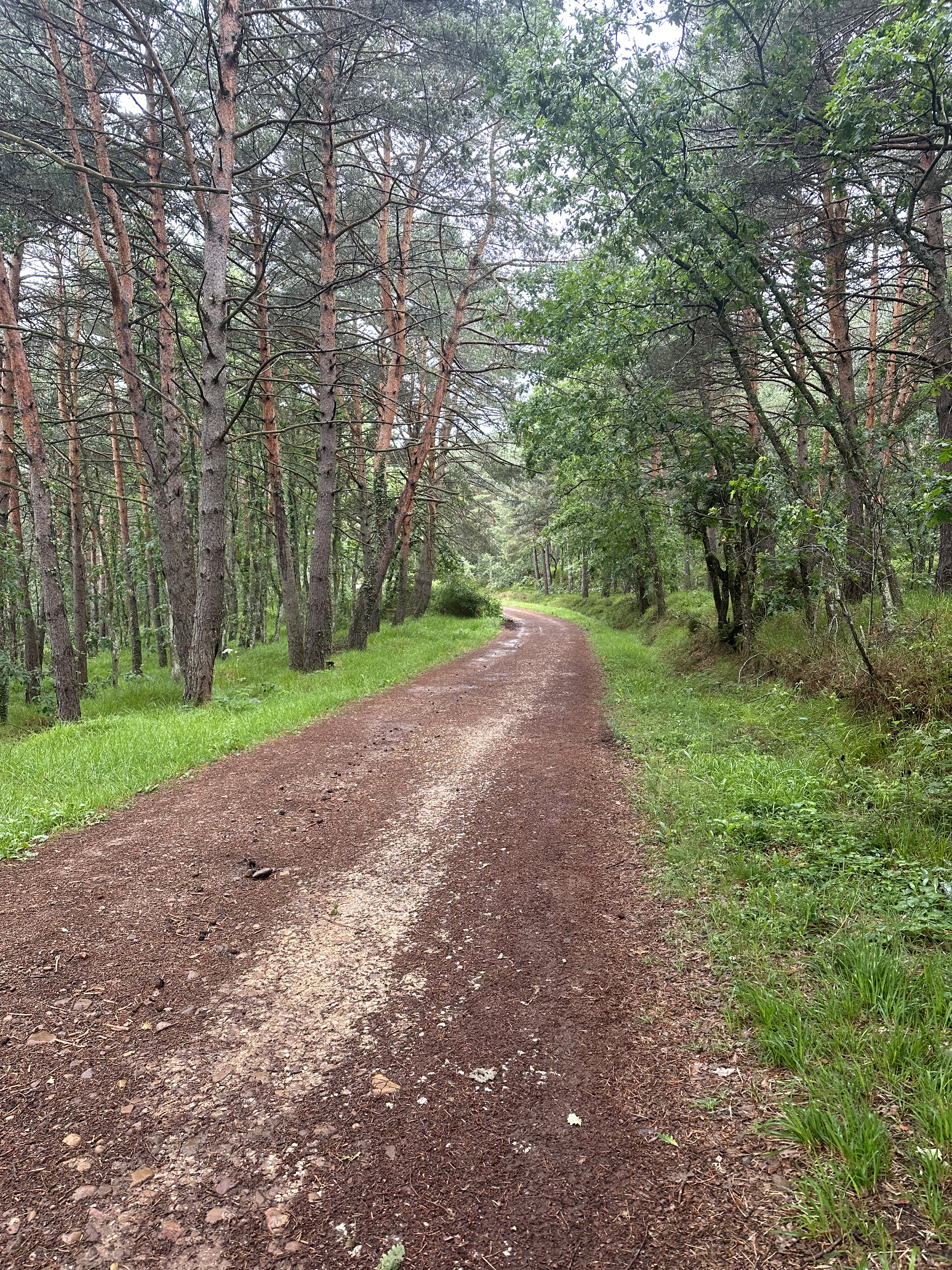
Day 7 – Ventosa to Azofra

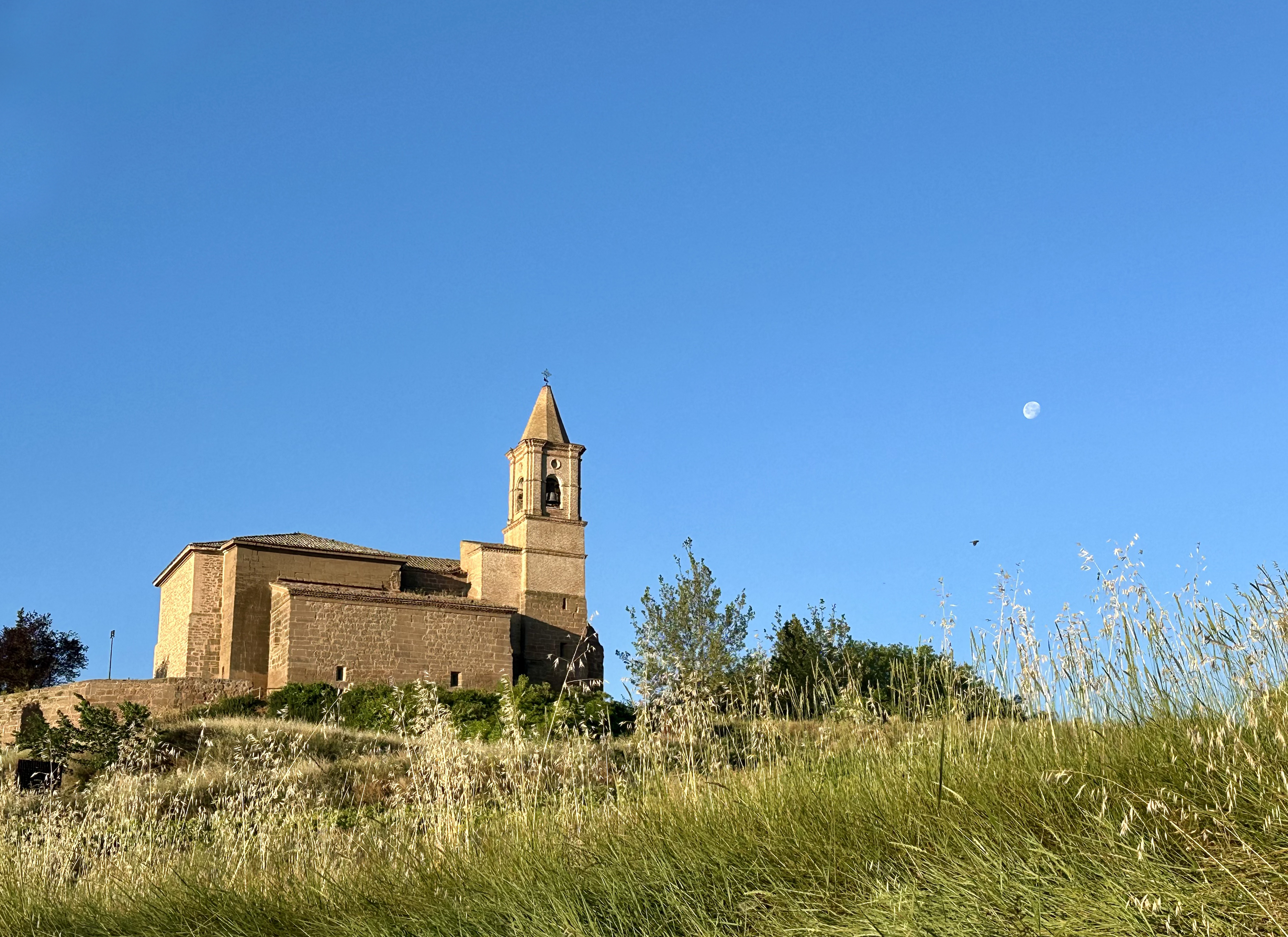
It’s a fantastic morning when I leave Ventosa, with clear blue skies and brilliant sunshine, and there is the moon still lingering in the sky. I’m the last one out of the door just before eight o’clock.

The typical morning pilgrim shadow, where each pebble is magnified by the low-lying sun.

Leaving Ventosa behind, I stop and look back.

Suddenly the path changes character and looks more like the bottom of a riverbed than a path made for walking. But yes, the yellow arrow is there. Can you spot it?

Here I catch up with Kristine and Rachel. Poor Kristine must have been battling with this awful, stony stretch for quite some time. The children Amalia and Ava walk when the path gets challenging, in fact Amalia walks a lot and even pushes the cart herself. We spend some time walking together into the next town Nájera.

The cliffs made of the rich, red clay soil of La Rioja, acts as a backdrop to the old part of Nájera and the river Río Nájerilla runs right through the town.

Rachel and I stop at a café on the riverbank for breakfast, but Kristine presses on, as she wants to get to her destination before it gets too hot.

Here Rachel walks ahead through this very characteristic landscape. It’s going to be a long day for her, but she is well protected against the sun.

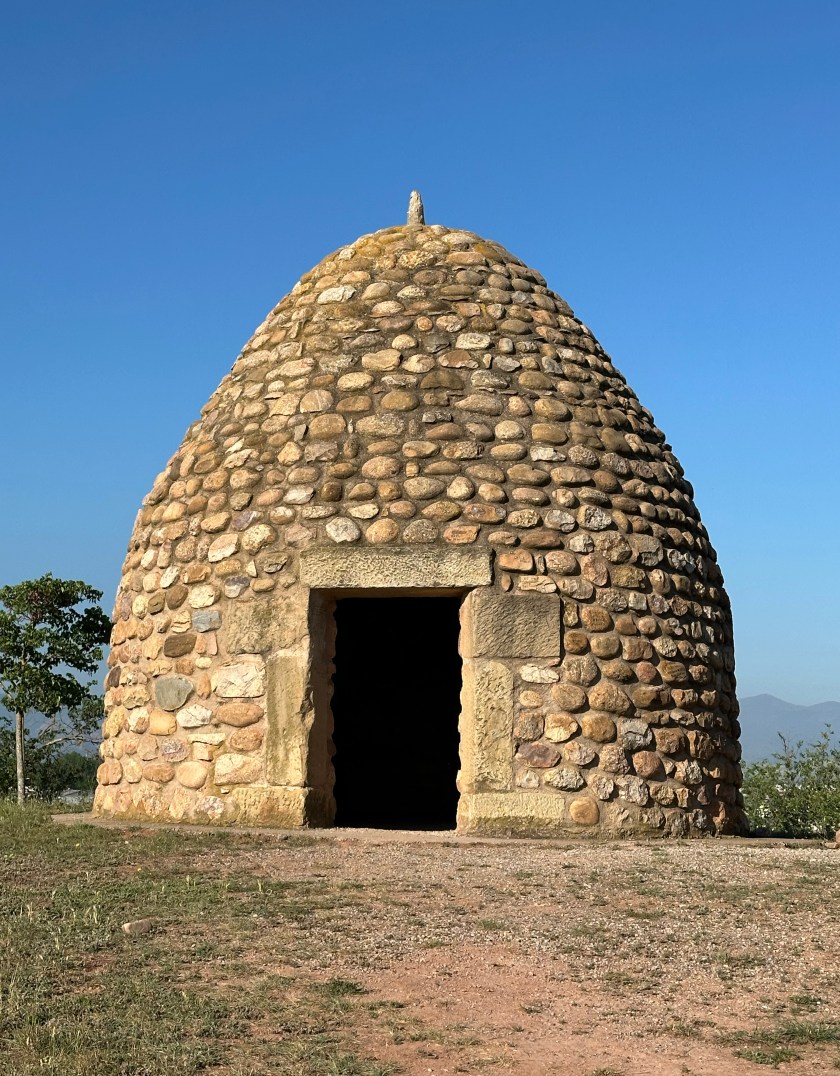
I pass a little stone hut that looks like a giant beehive, called Poyo Roldán. Roland was in Charlemagne’s army and legend has it that he confronted and killed a giant named Farragut – a Saracen warrior said to be 9 feet tall and supposedly a direct descendant of the biblical Goliath. 

This is my destination for today, the small village of Azofra. This village basically has two restaurants and a small shop that has the most basic food and household items. I’m staying in a small but very nice pension where I have my own room.

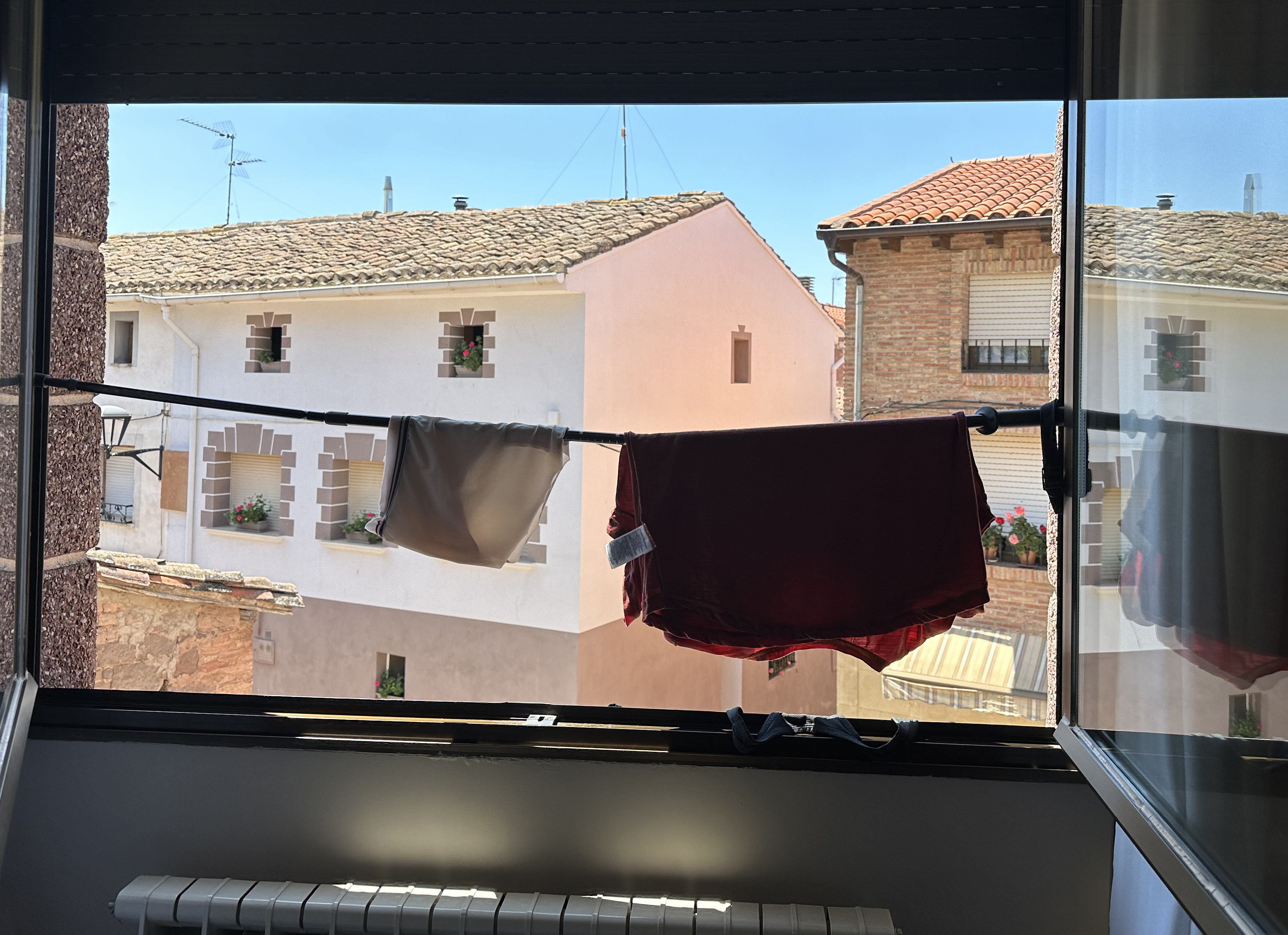
I start with the usual washing of clothes. But since there’s no place outside to hang them to dry here, I decide to try a walking pole hack I saw in a Facebook group. It works pretty well, at least until the next day, when it turns out the walking pole never quite recovers and eventually breaks completely…

After this I decide to go to the restaurant closest to me. I ravenous as usual and want to have the menu del día, and I’m directed to an interior part of the restaurant that is dimmed down and looks completely empty. Not so much fun I think and ask if I can’t sit here where the bar is, or outside at the tables there? No, this apparently doesn’t work at all. So inside I go, and it turns out that it isn’t completely empty. A man is sitting quietly in the corner eating his dinner, and I take the table beside him. We start talking and I’m about to hear about the journey of this amazing pilgrim.

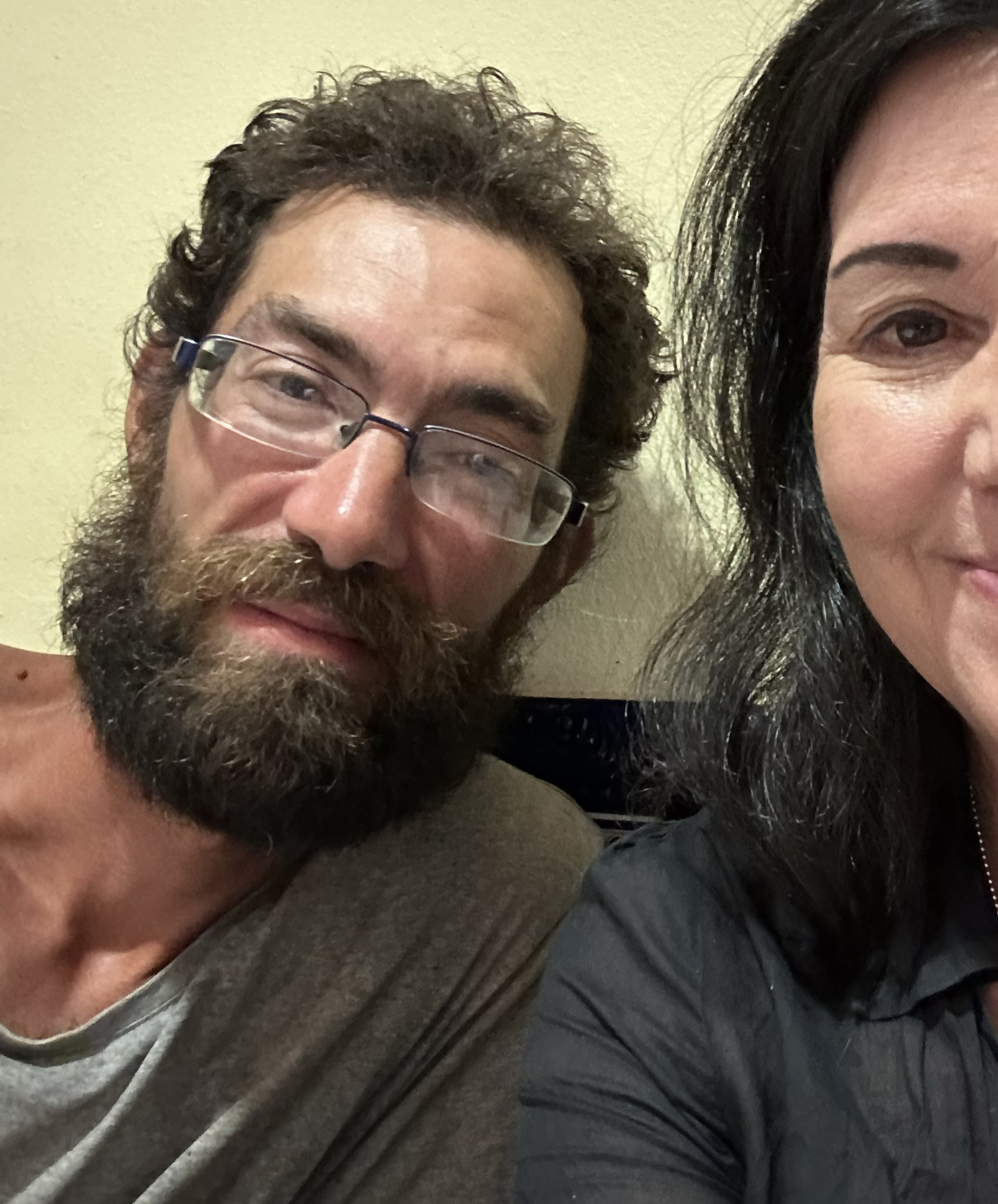
His name is Sebastián and he’s a frenchman from the north east of France, and he has been walking on his pilgrimage since he stepped out of his front door. He has hiked three of the four trails in France before crossing the Pyrenees. And this is not the usual crossing of the Pyrenees that everyone else does, we are talking about. He showed me his photos he has on his mobile, which he has been loading while we are eating. No, he crossed the mountains where it’s over 2400 meters, where the snow still lay and where there are small lakes. Even more astonishing is that he sleeps outside, without even a tent! When he crossed the Pyrenees he didn’t eat for two days, he tells me. Up until now he has walked 18000 km!

What for a moment ago looked like a boring dinner in an empty restaurant has suddenly turned into an unprecedented storytelling event and I am spellbound!

He tells me that he walks around 30 km per day and he has calculated that it will take him three months in total to get to Finisterre, which is his end point. He already thinks it’s too long, because it turns out he has a wife and four kids at home and he misses them.

The Pyrenees was by far the highlight of his journey. He is not too impressed by Spain I gather because as he says; I already have vineyards aplenty back home in France.

I suspect he doesn’t talk to many others, because he doesn’t take part in the pilgrim community at the usual meeting places in the albergues. He walks alone, eats his lunch in some village or town, walks some more, takes his dinner in another village or town, and then walks every day until 10 p.m. when he is out in the countryside again. If so it’s a pity, because others are missing out on the opportunity to meet this very likeable and soft-spoken man and share in his incredible adventures.

Sebastián is of course my highlight today, and has left a lasting impression on me. I am humbled and grateful to have met such an extraordinary pilgrim!

It’s time to say goodbye to Sebastián and head back to my pension. It’s raining heavily at night and I can’t help but think about him and sincerely hope he found some kind of roof over his head. Tomorrow Santo Domingo de la Calzada awaits.

Check out my earlier posts to get the full context of this pilgrimage and the one I did the year before, and sign up to be notified when the next post is released.

All photos copyright Anita Martinez Beijer © All rights reserved

Day 6 – Logroño to Ventosa

Leaving Logroño in the early morning sunshine, I walk past Parroquia de Santiago El Real. This is the oldest church in the area, completed in 1527. It has a single central nave and a Renaissance doorway by Juan Raón. 

I also pass a tall chimney, the only thing left of the town’s old tobacco factory, which was in use from 1890 to 1978 in a building that used to be the 17th-century convent of La Merced.

It takes me the best part of 45 minutes to finally leave the city behind me, on and alongside busy main roads. The next section is better, as I enter a the shady parkland of Parque de San Miguel, and walk along a reservoir.

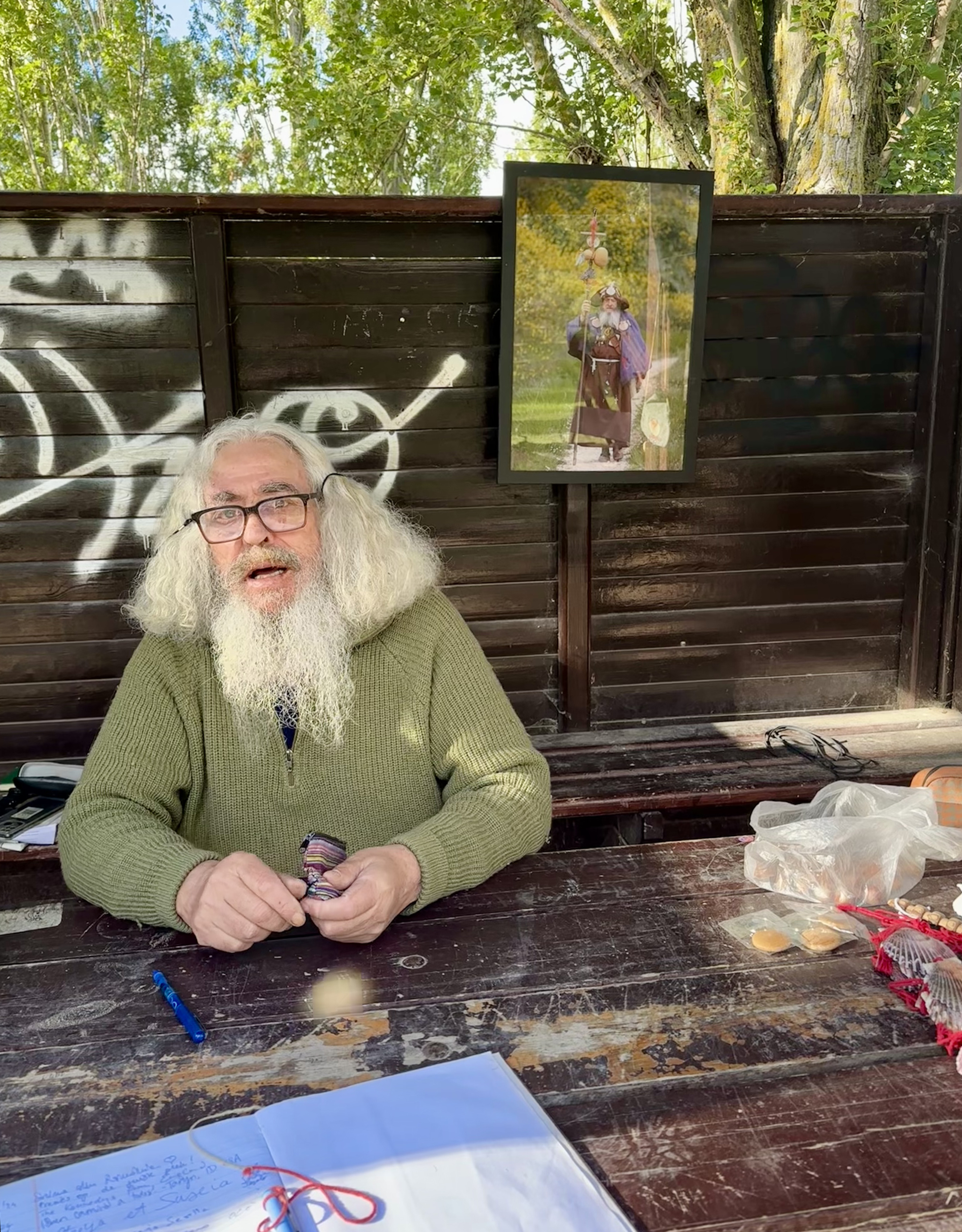
Here I meet the pilgrim Marcelino Lobato Castillo in his wooden shed, and he stamps my Camino passport. I stop and talk to him for a while, and he tells me that he’s been on a pilgrimage to India for three years! He was also the first pilgrim to make the Portuguese coastal road with ancient vestments, sandals, a donkey and a bag. Since he only speaks Spanish, this is my interpretation of what he said. That the meaning of life is to dream, to love; here he bows his head and kisses the top of his hand, and to celebrate life by being happy. Such a simple and appealing philosophy of life, so why is it so elusive and hard to achieve for most of us? In any case, I enjoyed our brief meeting.

“We are speeding up our lives and working harder, in a futile attempt to slow down and enjoy it.”

Quote by Paul Hawken

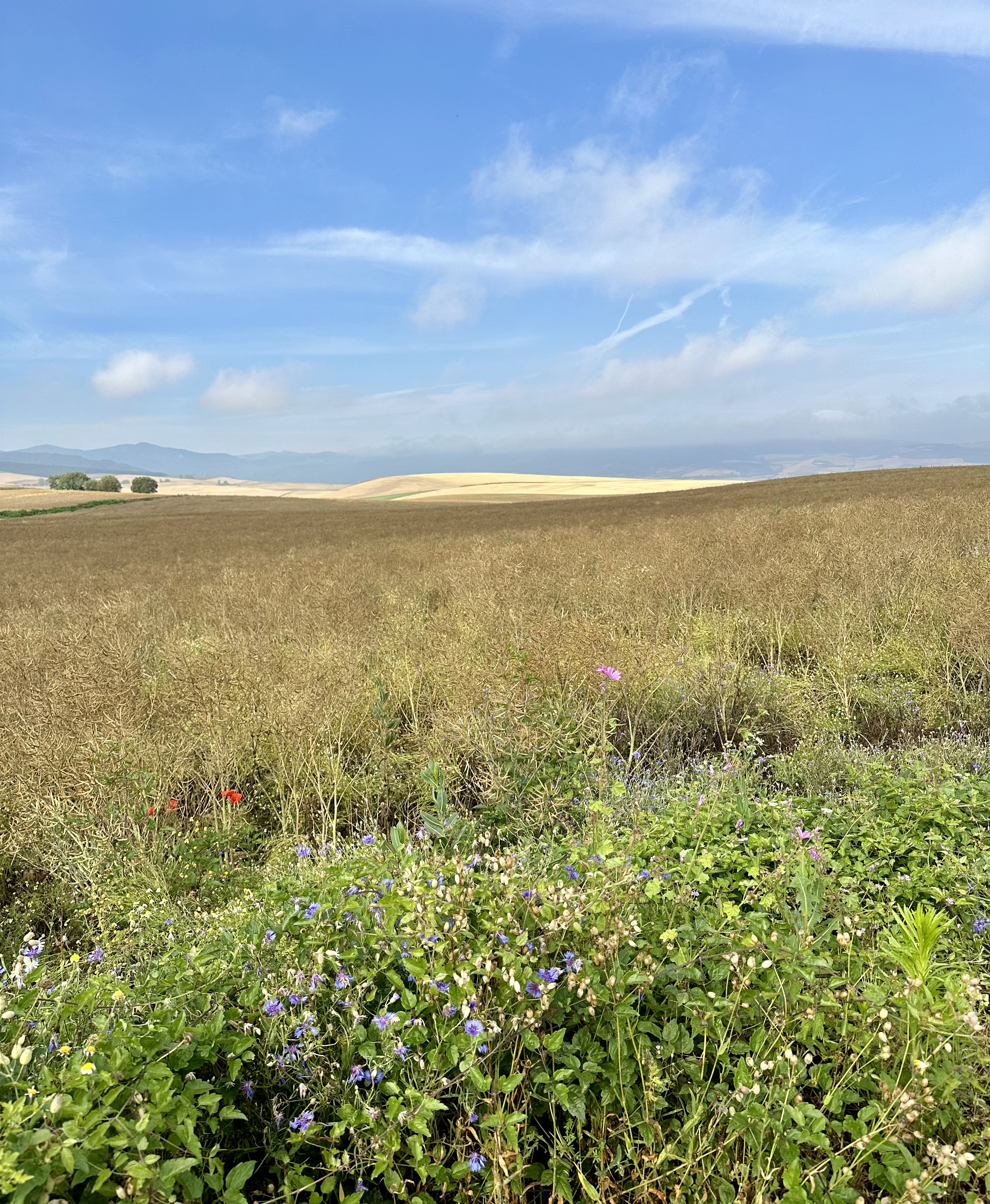
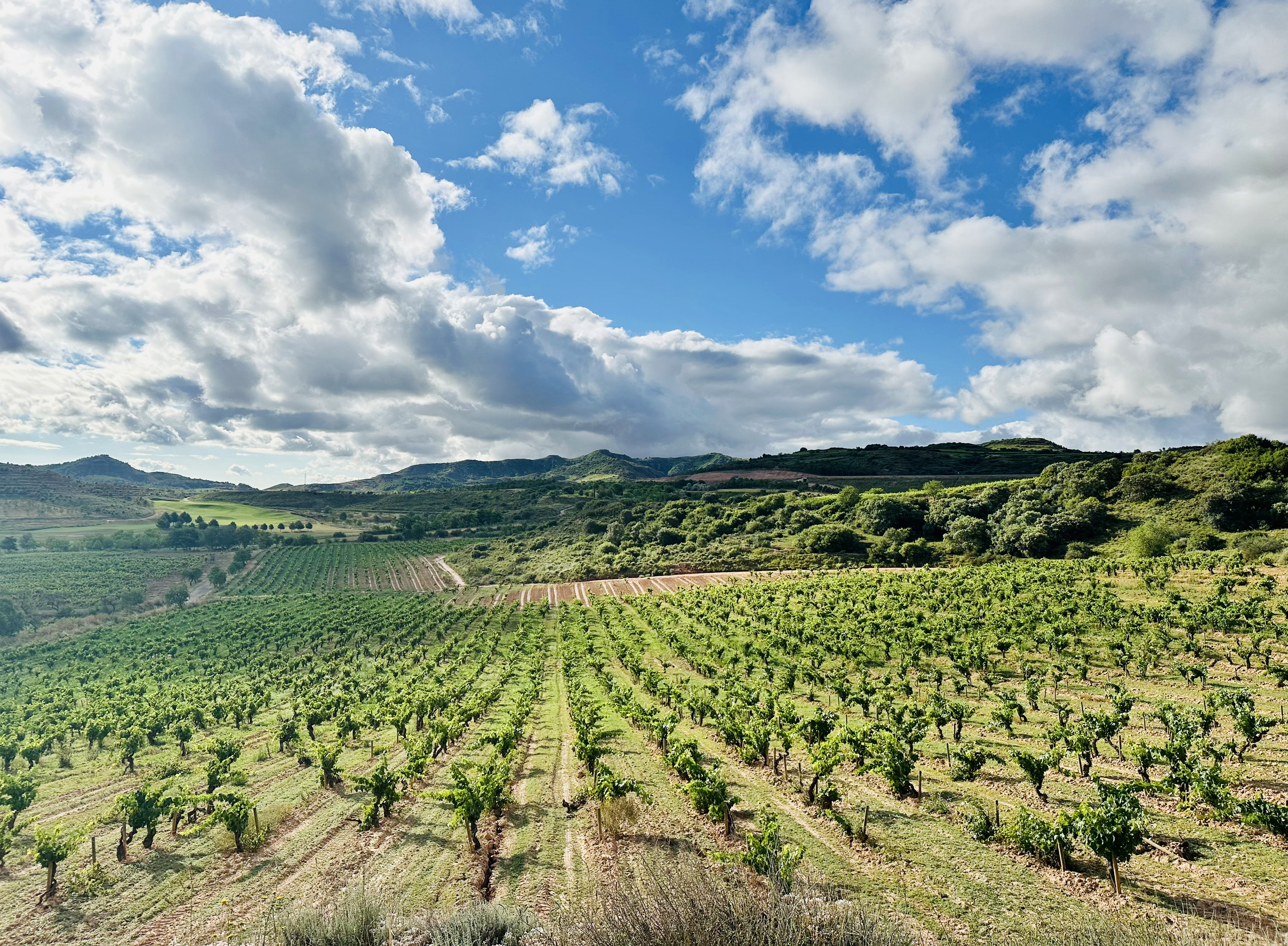
We are now in the wine district of La Rioja and the landscape is beautiful.

The path goes steadily upwards, and I pass the town of Navarrete before ending this slightly shorter walking day of 18 km. I’m staying at the Albergue San Saturino, and I arrive at noon before it opens, so I spend an hour having lunch in a shady garden of the only restaurant in this village, and I share a table with another pilgrim who has made the detour just to have his lunch here.

This albergue is a haven of peace and has a wonderful garden at the back, where most of us wash our clothes in the purpose built little house and hang them to dry in the sunshine in the garden. It also has a peaceful water feature.

I share a room for five with only two other women, Rachel, a very nice woman from the US, now living in Dubai, and a woman from France. Kristine and her children are also staying here. Rachel and I spend the evening talking over a simple dinner served at the albergue, before tucking in for an early night. Never before or since have I shared a room with such silent sleepers.

Tomorrow will be a similar walking day as it is 17 km to Azofra. I am thankful that I am applying what I learned from last year, so that I have now shortened my walking days to suit me better.

Check out my earlier posts to get the full context of this pilgrimage and the one I did the year before, and sign up to be notified when the next post is released. If you enjoyed this post, please give it some love by sharing and liking it!

All photos copyright Anita Martinez Beijer © All rights reserved

Day 5 – Sansol to Logroño

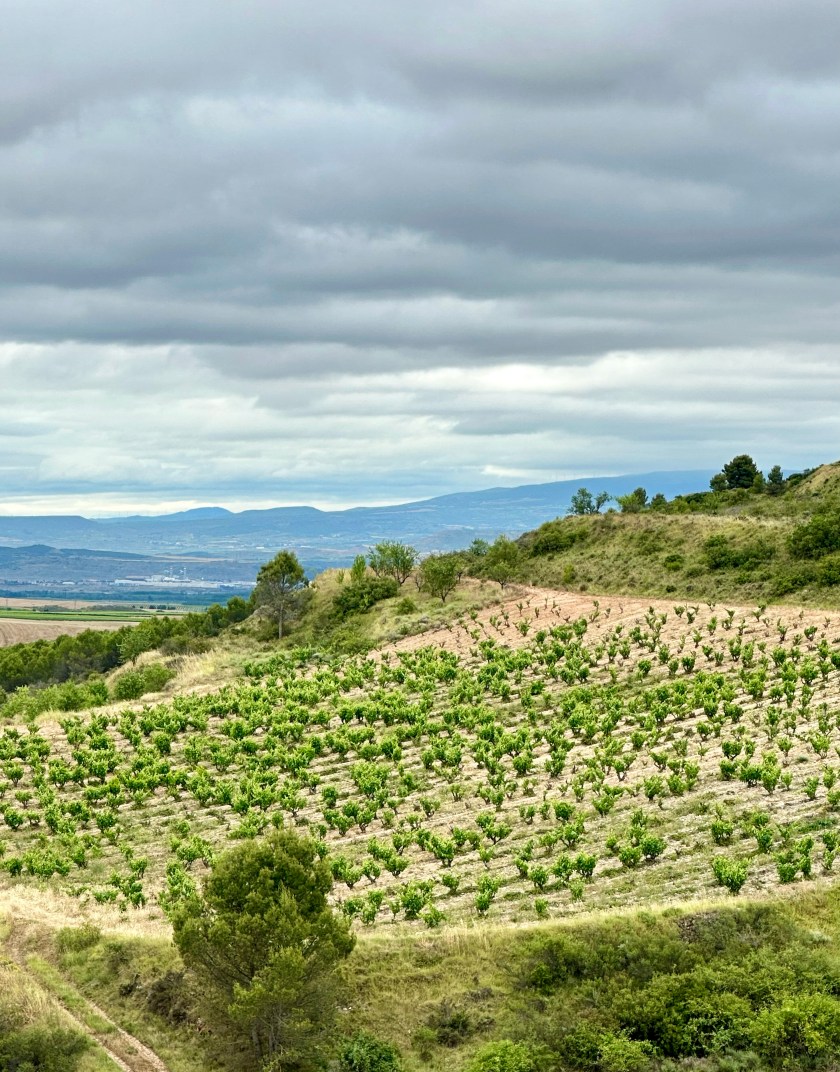
Today I’m heading to Logroño, which is a 21,3 km walk, on mostly natural paths and dirt tracks through farmland. Here is a view from the Alto de Nuestra Señora del Poyo, looking out over a vineyard. This is still Navarra, but just before Logroño, we’ll enter the region of La Rioja.

Just outside Sansol in Torres del Río, I meet the two Swedish women from yesterday’s dinner, Malin and Maria, and we continue to walk together. It’s always fun to get to know more about the new people I meet along the way. They come from Malmö, a city in southern Sweden opposite Copenhagen, where I myself enjoyed living for over six years.

We stop and rest in Viana and have a late breakfast or early lunch in my case, at the café tucked beside the church Iglesia de Santa Maria. Here in Viana we meet Elin and Rickard, Kristina and also Kristine with her children again, as they are leaving the café when we arrive. I’m glad to see that there often seems to be a pilgrim ready to give her a helping hand or two along the way.

Experience the feeling of walking

This what it can feel like to hike for long days, when the surroundings aren’t very inspiring. This video is less than a minute. Imagine five, six or seven hours of this non-stop, day in and day out…

It’s quite an uneventful day of pretty much focused hiking, passing mostly vineyards, but it also has it’s fair share of suburbs, factory buildings, and busy roads to cross, and I’m not inspired to take many photos. Closer to Logroño, there is a stretch where we go through a pine forest, which provides a nice coolness, because even if it’s not hot, it’s warm enough for me to feel it. I say goodbye to Malin and Maria, because it’s starting to feel hard now and I need to rest for a while. It usually takes about a week or so for the body to adapt to walking longer stretches with a backpack every day, and I’m not quite there yet.

Just before entering Logroño, I pass a lady sitting outside this house, and I get a stamp in my Camino passport from her. She tells me that this is her great-grandmother’s house.

Logroño is a large university city and the capital of La Rioja. I have a private room here, and I head straight there as soon as I arrive and have a much needed siesta. Later in the evening I head out in search of a place to have dinner. Being in a big city has the advantage of having a greater variety of restaurants, something I am not slow to take advantage of. I’m one happy customer when I discover an Asian fast food restaurant not far from my hostel, where I enjoy tempura and a cold Asian beer. As much as I like the Spanish food so far, a little variety doesn’t hurt.

Tomorrow I’m walking to Ventosa, a small village, and I’m looking forward to being in the countryside again.

Check out my earlier posts to get the full context of this pilgrimage and the one I did the year before, and sign up to be notified when the next post is released.

All photos copyright Anita Martinez Beijer © All rights reserved

Day 4 – Villamayor de Monjardín to Sansol

Today, believe it or not, I actually got lost! I didn’t think it was possible, as the trails are generally well marked. Also, I sat on the balcony yesterday and watched pilgrims walk by on the street below. So what made me go up into the village and start walking on an unmarked dirt road, at the top of the village?

Happily leaving Villamayor de Monjardín behind me early in the morning.

I follow my app Organic Maps which usually is reliable. I’m full of energy, and feel like I’m flying along the trail at the top of the ridge. Eventually I come to the conclusion that I must be on an unmarked cycle path. I’m not too worried, despite the lack of the yellow arrows that usually show the way. During the previous days, the paths for pilgrims on foot and pilgrims on bicycles often crossed each other. Sooner or later this road will cross the camino, I think optimistically.

It doesn’t. It ends on a paved road for cars with no edge to walk on. I realise that I’ve been following the completely wrong path, but going back is out of the question, because it is just too far. So I start walking and am thankful that there’s no traffic at the moment. A roundabout eventually appears and at first I despair. But then I see a van that is heading towards me in the opposite direction that stops just in front of the roundabout. I quicken my steps and start waving.

It’s David, a friendly craftsman who has caught sight of me and immediately knows I’m lost. He tells me that he is going to Los Arcos and he’s happy to give me a lift there. After a little while, he points ahead and tells me that this is where the camino crosses the road, and then he can’t understand why I rather would get off here instead of going all the way to Los Arcos by car. After all, it will save me at least 8 km. I thank him and tell him that he saved my day and that he must be my guardian angel, but I’m here to walk, and just like that, I’m happily back on the camino again.

This is pure agricultural land, where cornfields, vines and olive trees succeed each other, mile after mile with no villages.

Luckily there is a food truck that serves hungry and thirsty pilgrims, me included. Here I meet Elin and Rickard from Sweden, with whom I shared a room yesterday. They look surprised when they see me, because they thought they left before me, so I tell them about my adventure.

What do I see in the middle of the road as I enter Los Arcos? Geese! I haven’t seen any geese until now. Is it a sign? See yesterday’s post about the forge.

In town I meet Elin and Rickard again and we have lunch together, before we set off separately again, as they want to visit the church Iglesia de Santa María de Los Arcos.

This is an absolutely wonderful day, even if I got lost in the beginning. I’m tired for sure, but enjoying it to the fullest and now I see Sansol from a distance.

I arrive at my destination, Palacio Sansol, a former palace lovingly transformed into albergue by an elderly man from Pamplona. It had been left abandoned for many years and was in really bad shape when he had a vision to turn it into an albergue. It took him many years and a staggering amount of money to realise his vision and luckily he was able to enjoy the result of what he told people were the best years of his life, before he passed away.

This is the room that I’m lucky enough to share with singer and songwriter Kristina Jacobsen, an American of Danish descent, as we hit it off instantly. She’s brought her guitar with her, and as she is on the camino researching for a future event she’s planning to hold. Right outside our door is a piano, where the manager of Palacio de Sansol is playing and improvising the most beautiful piece of music.

I appreciate how well the new contemporary architectural elements blend with this old building, and the carefully thought out areas that cater to the needs of pilgrims. A large courtyard has several sinks and washing machines, and plenty of space to hang clothes to dry. There are also several terraces to hang out on, and that’s exactly what I do and here I meet new friends; Hugh and Judith from England and Kristina from Germany who is walking alone with her two small children Amalia and Ava. From now and onwards every time I find it challenging I think about her, walking alone with a wagon on difficult and steep paths, and still always manages to stay positive and smile. She is truly amazing!

I would love to have had my dinner at the Palacio, but neither Hugh, Judith, nor I can face yet another tortilla for our evening meal, as it’s one of the few options available for breakfast or lunch, so we go down to another albergue in this small village and have a delicious homemade paella. Here I meet Elin and Rickard again who are staying here as well as two other Swedes, Marie and Malin. We are also joined at the table by a Frenchman.

This is ultimately what the camino is all about. Community and companionship. Meeting people from all over the world and sharing stories and meals together. Need I say that Sansol is one of the highlights of my camino?

Tomorrow I’m going to Logroño, and it’s going to be another long day of hiking. Logroño is a larger town and one that is considered a natural place to stop on the camino. But if there’s one thing I’ve learned, it’s that it’s these smaller villages and towns that aren’t the traditional stops that are worth their weight in gold!

Check out my earlier posts to get the full context of this pilgrimage and the one I did the year before, and sign up to be notified when the next post is released. If you enjoyed this post, please give it some love by sharing and liking it!

All photos copyright Anita Martinez Beijer © All rights reserved

Day 3 – Estella to Villamayor de Monjardín

Last year I had to start very early every morning to beat the heat, and I enjoyed the wonderful sunrises. This year is very different. It seems like overcast days and rain will be more the norm, and I figured I might as well have a lie in, since I won’t be walking far today. Well, it doesn’t work out as I had planned, as I wake up early to the rustle of backpacks and people moving about, and then the blinds are pulled up and the windows are thrown wide open by the staff as early as seven o’clock, so I guess the day has started for me too.
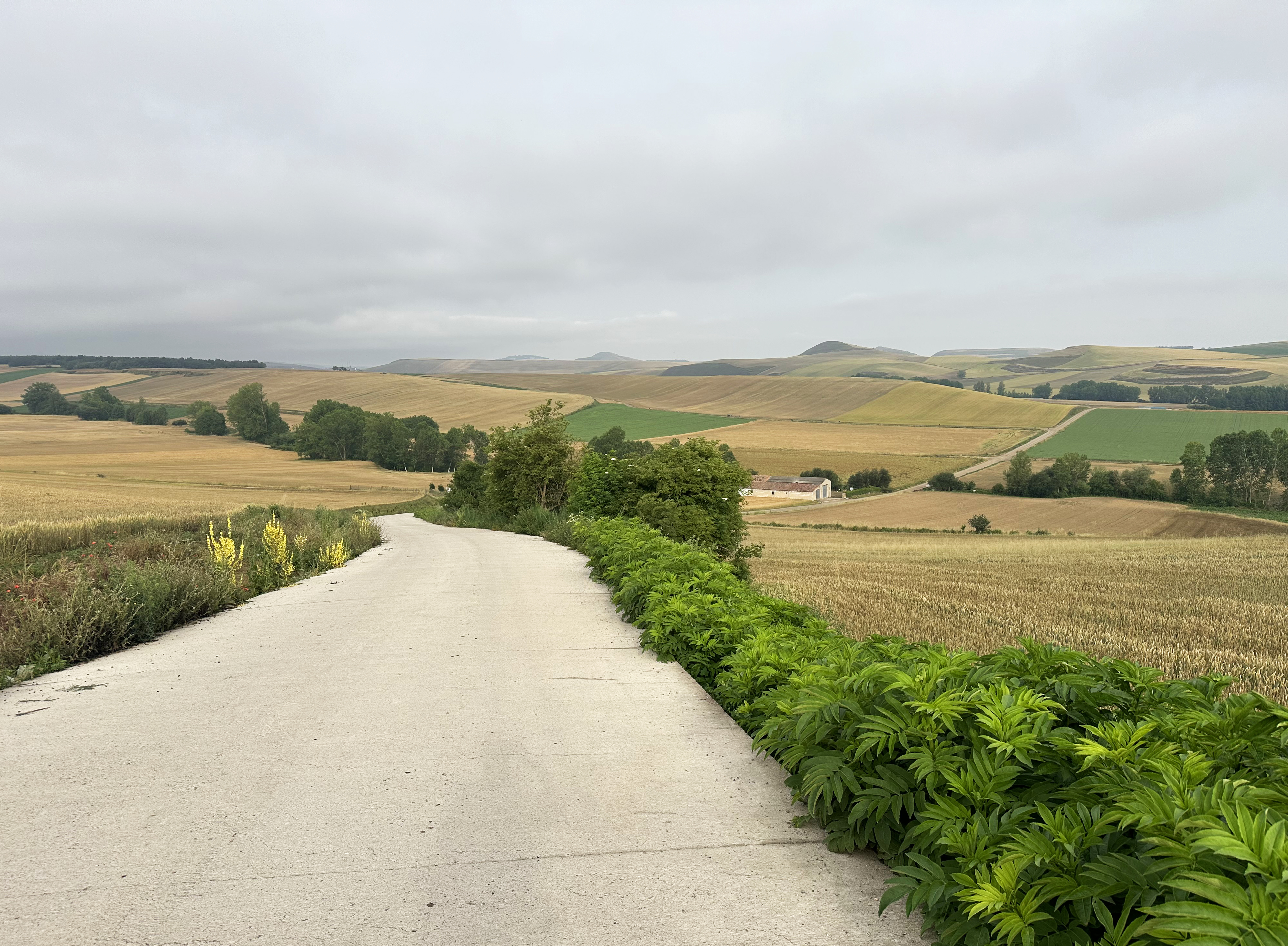
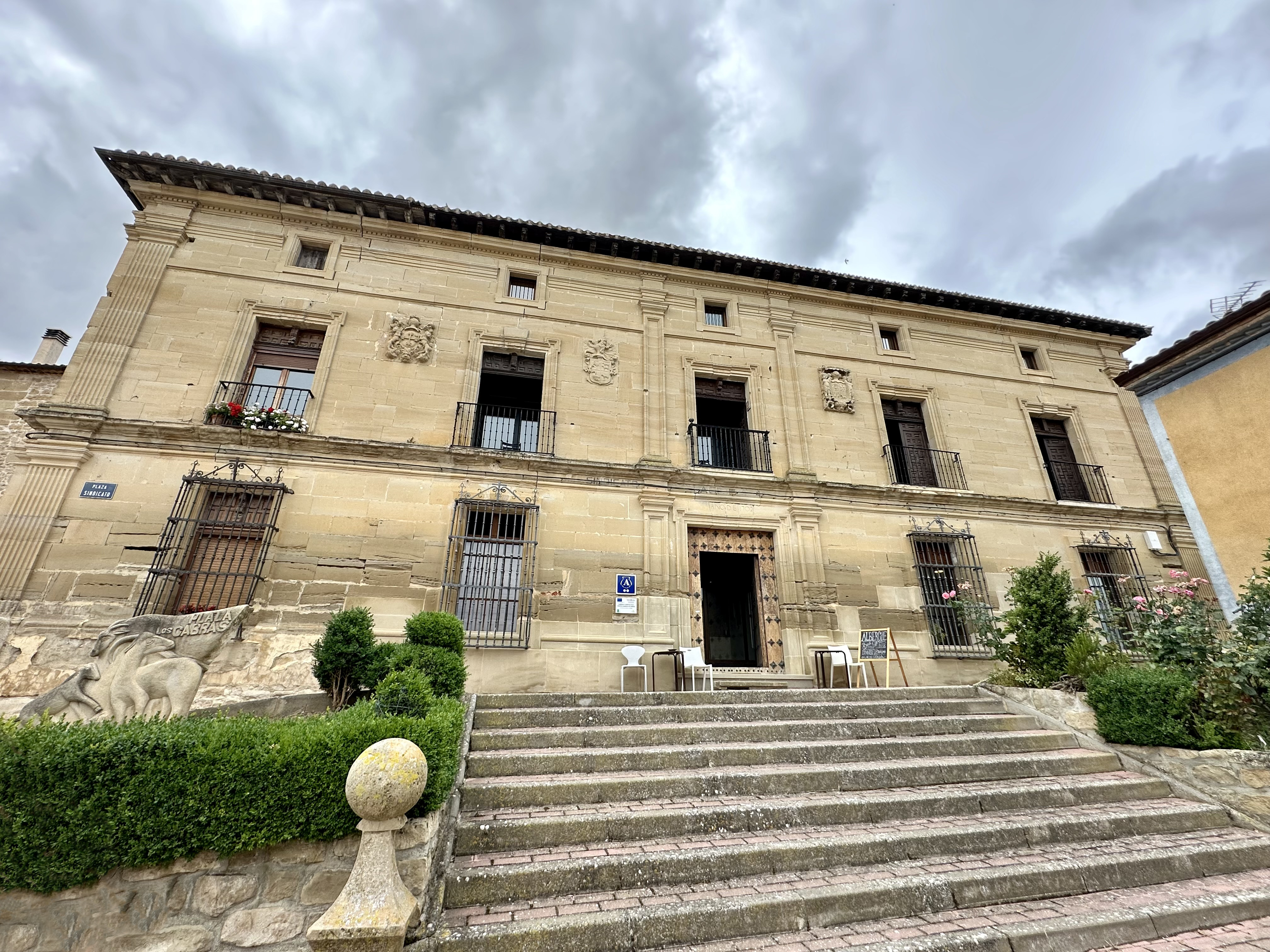
Amazingly my feet and legs feel fit for another day of walking, and I’m out of the door just before 9 o’clock, which is late in anyone’s book.

Leaving Estella, a town I would have liked to explore more.

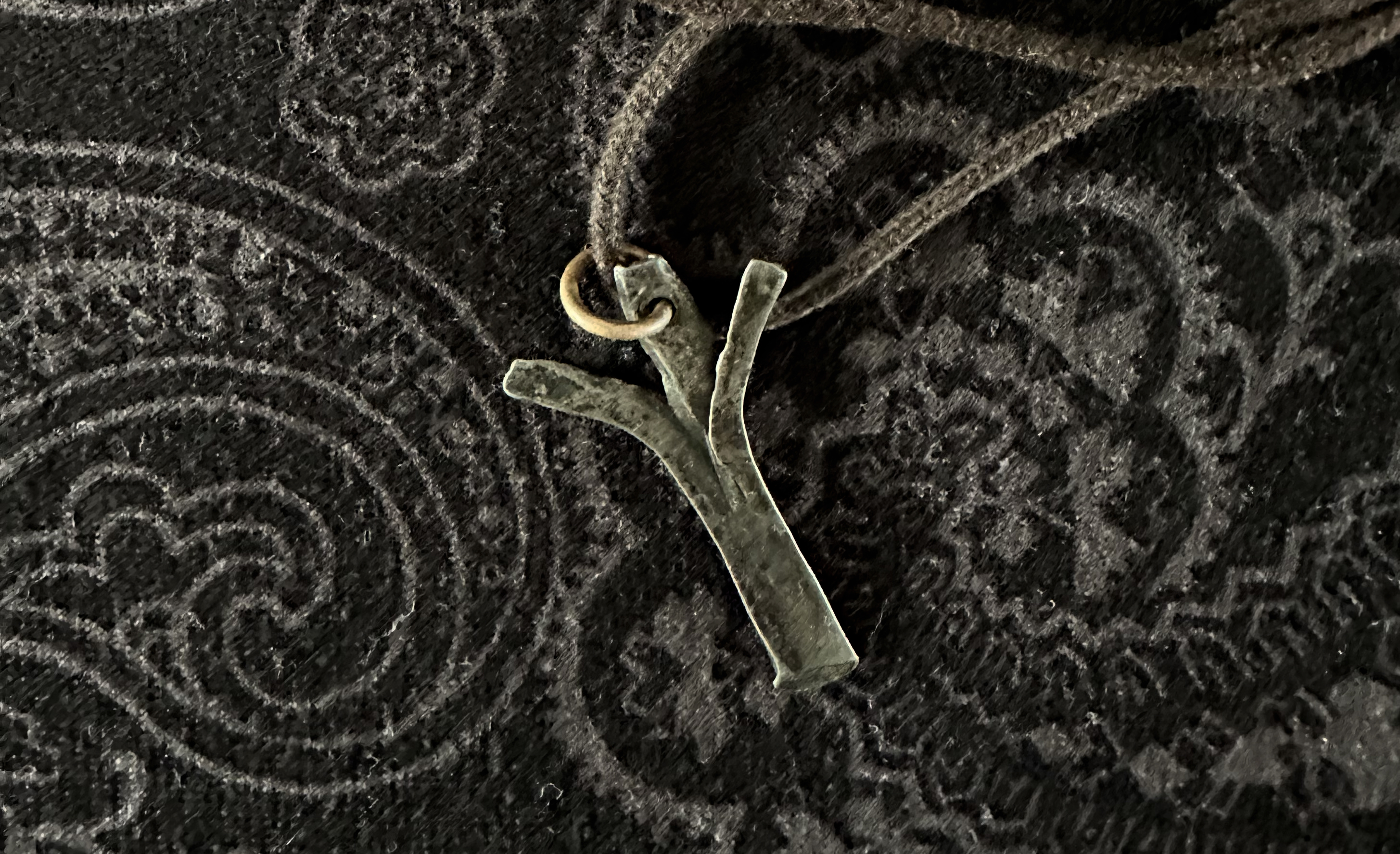
After Estella I pass a delightful forge just outside the small village of Ayegui. It’s called La Forage de Ayegui and it’s run by the most likeable blacksmith and artist. He has beautiful sculptures, works of art and jewellery as the scallop shell, the symbol of St James and the Camino. But it is the symbol of a goose foot, la pata de oca, that catches my eye. I remember reading about a game that was probably developed by the Templars as a coded map or a symbolic game that represents the Camino Santiago. There are many goose images, names of places and other references of geese on the camino.

I buy the goose foot, because for me, it is also a symbol of hope. The friendly blacksmith tells me that the power of the fire it’s made with, will give me strength on my journey.

At the forge I meet Alan from Italy, and we team up and walk together to Monjardín.

What are the odds that we should meet another Italian doing his camino on horseback?

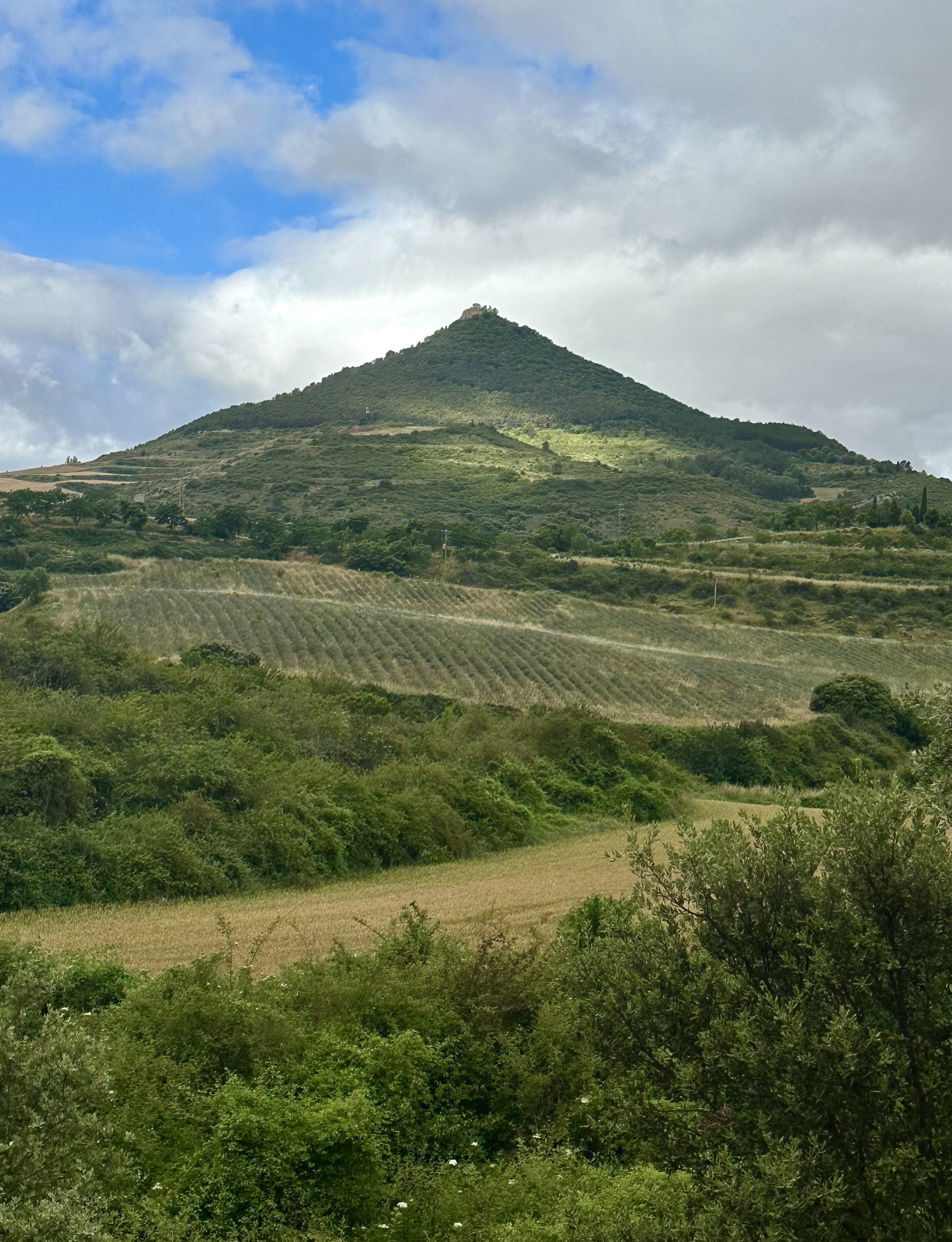
We stop for a break in the small village of Azqueta and there it is, the castle Castillo de San Esteban on top of a mountain. Villamayor Monjarín is directly below it. Not far to go now and I’m pleasantly surprised when we arrive there in no time at all. After only three hours of easy walking, it feels wonderful to arrive at the destination of the day fresh as a daisy, instead of feeling wrecked.

I staying in the Albergue Villamayor de Monjardín , whose nearest neighbor is the 13th century Castillo de San Esteban church. I’m so early that I’m the first pilgrim through the door when it opens, and of course I pick a bed right by the balcony with a magnificent view.

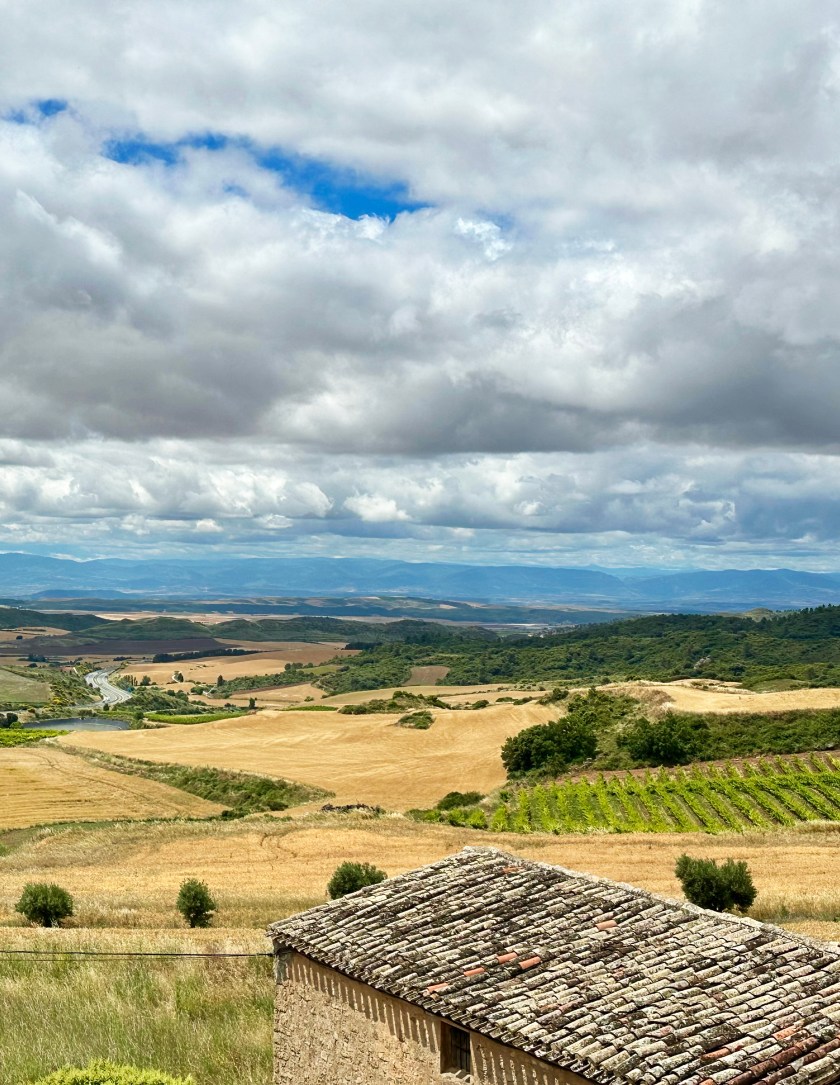
And this is certainly a room with a view! I spend a leisurely day washing my clothes, resting, and enjoying this vista on the small balcony. Over the next few hours the room fills up with no fewer than five other Swedes!

We share a lovely and fun dinner together, which is also happens to be Midsummer Eve in Sweden, with a man from Venezuela who lives in the USA, a Frenchman and a Canadian, and with our hosts. The food is all local produce and even the wine is from Monjardín.

Tomorrow is another 20 km day, this time to Sansol, and I’m really looking forward to it!


Check out my earlier posts to get the full context of this pilgrimage and the one I did the year before, and sign up to be notified when the next post is released. If you enjoyed this post, please give it some love by sharing and liking it!

All photos copyright Anita Martinez Beijer © All rights reserved