
I leave Sarriá behind me not long after 6 AM when it’s still dark. The first thing I meet is an express train rushing past me just by the trail! If I wasn’t fully awake before, I am now. The sunrise is particularly beautiful today, and I’m enjoying my walk. The first 10 km feels easy enough, and I rest for the first time at a café after two hours, where I have my breakfast, a coffee and a French omelette.

I ponder again the difference walking the Camino from the last time, and the community spirit I’m missing when Wilfried catches up, and we continue to walk together. At A Pena we come cross the 100 km milestone! It has a huge significance, especially to those pilgrims who have hiked about 688 km up till now all the way from St. Jean Pied de Port. But, wait a minute! This isn’t how I remember this milestone from the last time! Yes, they have made changes since then, such as making new milestones and moving the locations to be more correct.
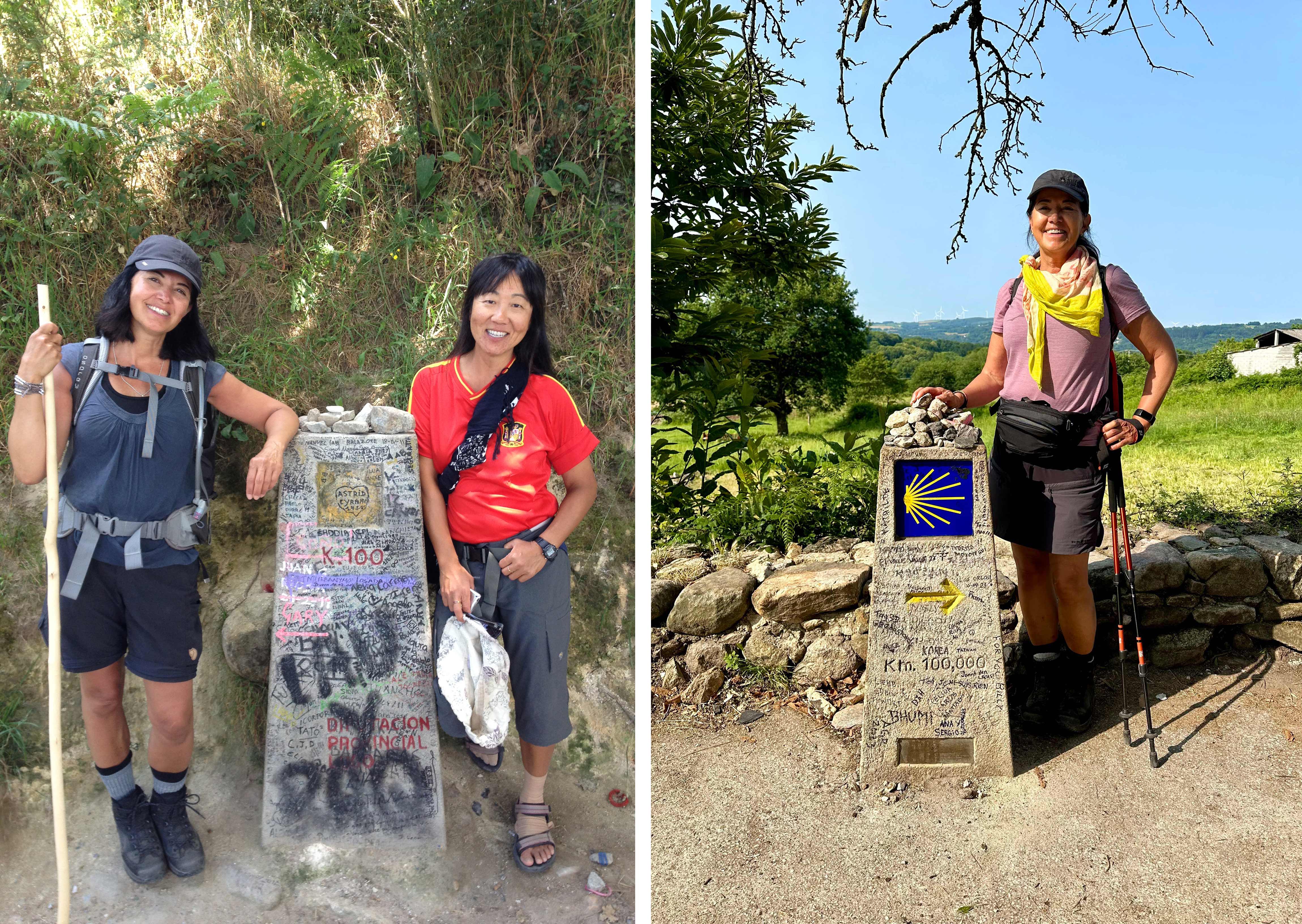
The 100 km milestone in 2012 and now 2023.
About halfway, where I remember I sat on a stone wall to rest, we suddenly come across a bagpiper in the middle of nowhere! We stop to listen for a while and when we leave, we discover he even has his own stamp for our pilgrim passports. I remember the bagpipers in Santiago de Compostela, one of the first things you encounter when entering the big square in front of the cathedral, and I feel the first stirring of emotion at this reminder of the end not being far away now.
Every day you need at least two stamps from Sarría to Santiago de Compostela. Before Sarría you only need one. You can get them at every hostel, pension, hotel, café, restaurant and at some of the churches. This is to show the pilgrim office you have walked the trail from wherever you started, to receive your credentials at the end in Santiago de Compostela.


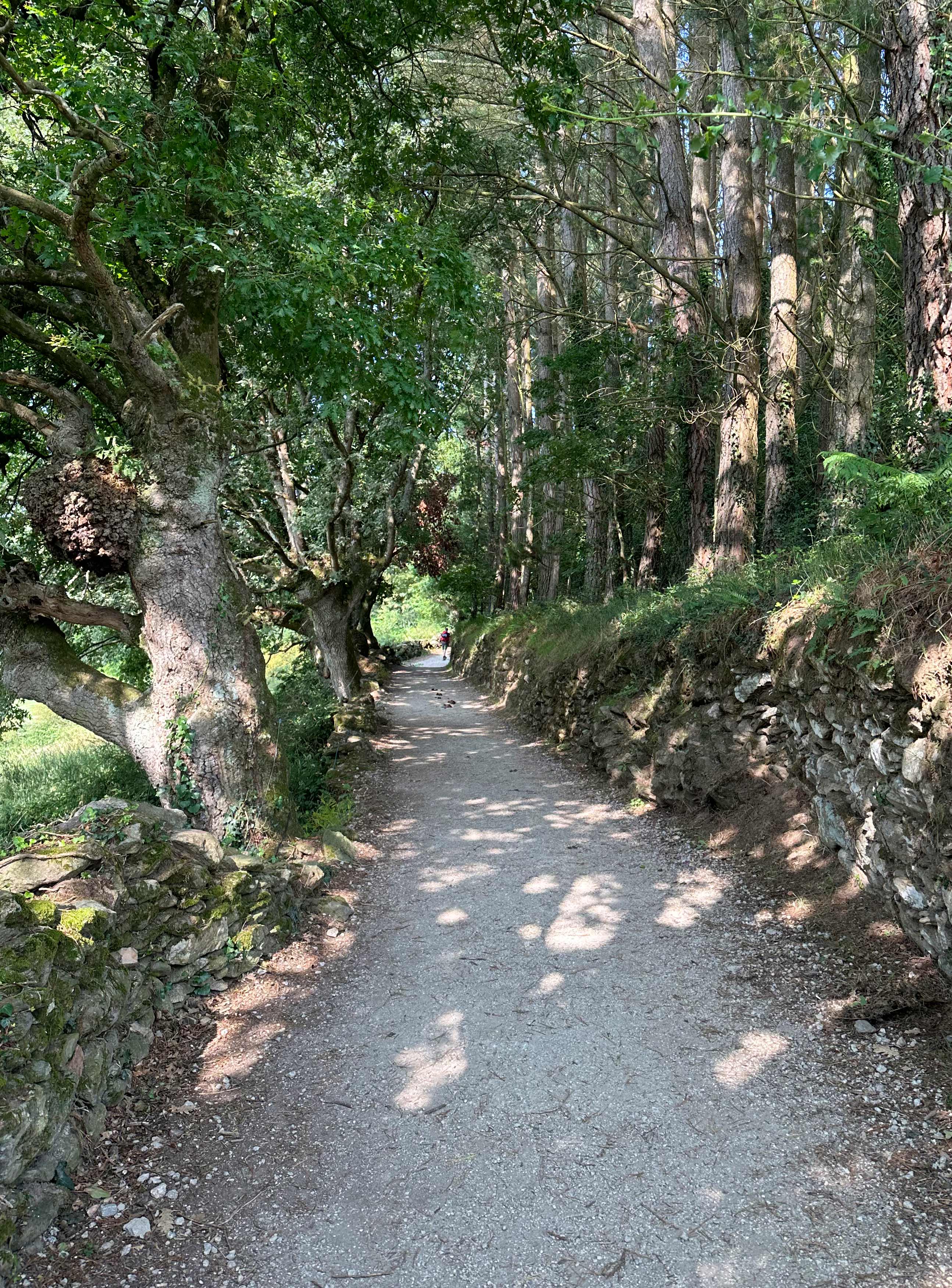
Then we reach Mercadorio, and I really want to stop, as I have very fond memories of staying here the last time. We decide to stay and enjoy an exquisite goat cheese salad as a late lunch. Who is sitting outside if not Teresa, whom I met earlier and then in quick succession comes Tine and after her Suzanne! Suddenly we share not only a table, but also our day and our experiences as if we’ve always known each other and in an instant, I have that Camino community feeling that I’ve been missing! The Camino doesn’t give you what you want, but what you need…
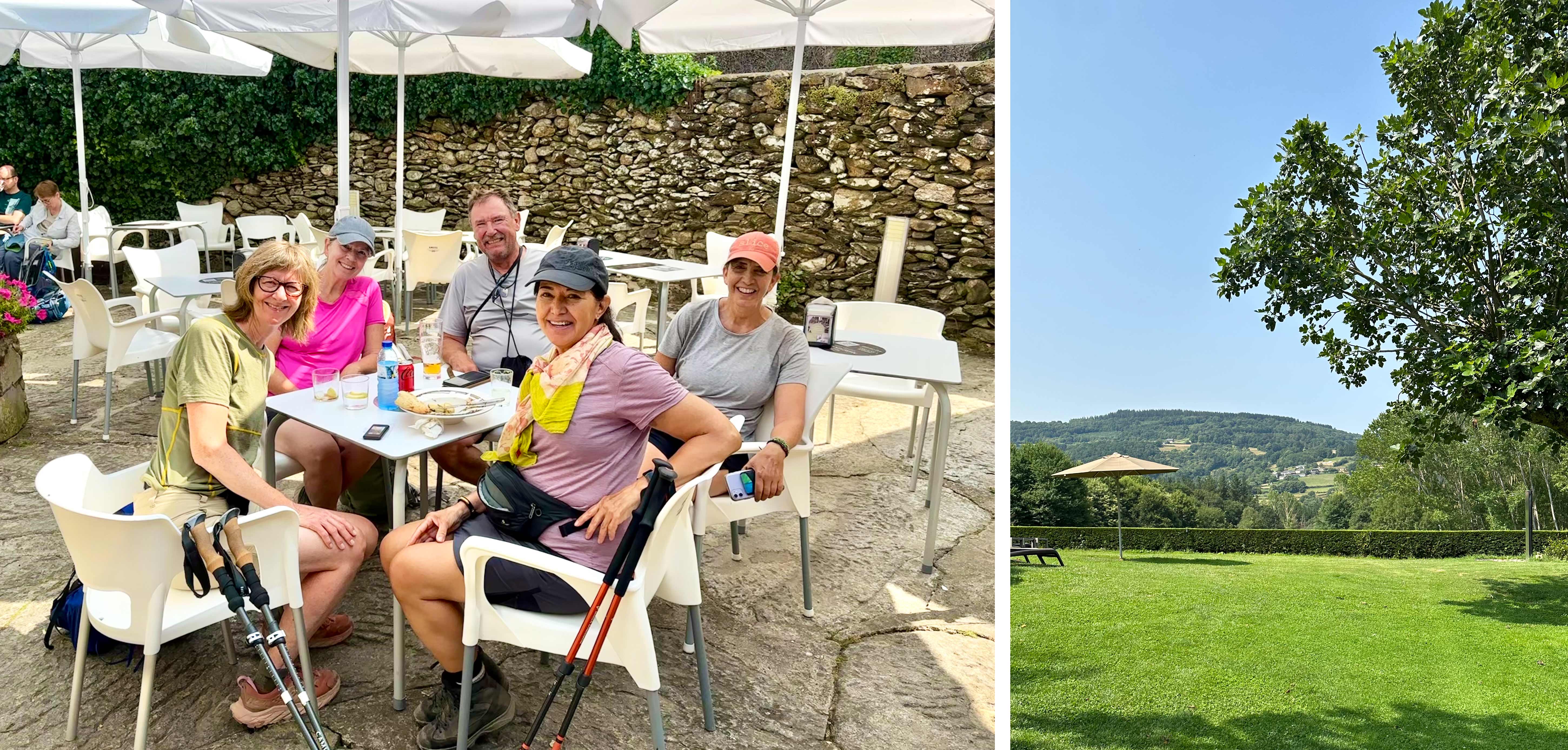
It’s getting hotter by the minute, so I want to keep going because I know Portomarín is…on a hill of course, as all the towns here seem to be, so Wilfried and I press on.

I wish I had taken photos of the bridge crossing the river Miño, and the very steep staircase leading up to the town, that’s part of the original medieval bridge, but alas I’m too exhausted by the time we reach Portomarín. Once again it it’s not so much the distance that’s the issue here, as this stretch is only 23 km, but the heat that totally zaps the energy out of me. The weirdness of the steep staircase by the way, has its explanation. The bridge and several other historical buildings where moved, stone by stone, to higher ground when the dam was built across the river to create the Belesar reservoir in 1962.
I have a very nice room at the heart of this small town, on the cobbled main street with handsome stone colonnades. After a well-deserved shower and hair wash, I crash into bed for my siesta. Suzanne and I have a date to have dinner together, but she’s also all done too, so I grab a Caldo Galega at the nearest restaurant and have an early night to get an early start and hopefully beat the heat tomorrow.
Check out my earlier posts to get the full context of this pilgrimage or my latest Camino, and sign up to be notified when the next post is released.
If you enjoyed this post, please give it some love by sharing and liking it!
All photos copyright Anita Martinez Beijer © All rights reserved
The Camino de Santiago is a pilgrimage rooted in medieval origins. It leads to the tomb believed to be that of the Apostle Saint James the Greater, in the crypt of Santiago de Compostela Cathedral. The Camino was, and still is, Europe’s oldest, busiest, and most well-known route.
 Bohemialife