

Late start today after unfortunately only getting 4,5 hours of sleep. There are some significant changes on the Camino since my last time here. One of them is that they have created alternative routes. At O Cebreiro the forest track I took 2012 is now a complimentary route, and the new one I take today is the official route. It’s a delightful soft forest path running parallel to the road, but you never actually see it through the dense forest, and sometimes it runs on a different level from the road too. It’s foggy and everything gets damp, including me, but it’s a pleasurable hike.

The first café I get too is dark and crowded. I grab a quick coffee at the counter and want to exit, but there’s a bunch of Americans getting ready to leave too, and one of the girls has left a backpack right in front of the door. I wait for her to move it so I can pass, and she replies rather impertinent that I can just jump over it. This ill-mannered response, and other aspects of egocentric displays of human behaviour that I have come across this time on the Camino, such as walking and listening to loud music without headphones, are today’s food for dark thoughts and reflections on attitudes, respect, and basic pilgrim code of conduct. It feels like a relatively new phenomenon and is probably why the discussions are high on the various forums about ‘real pilgrims’ and ‘tourists’.

Good thing for me that I can refocus on the beauty around me, because everything has a magical feeling when shrouded in fog. It’s a steep climb to Alto do Poio, but once up there the view is magnificent! We are above the clouds up here and mountain peaks rise like floating islands. There is a café here and I have a large glass of freshly pressed orange juice and a tortilla for brunch, and I’m as good as new and ready to go.
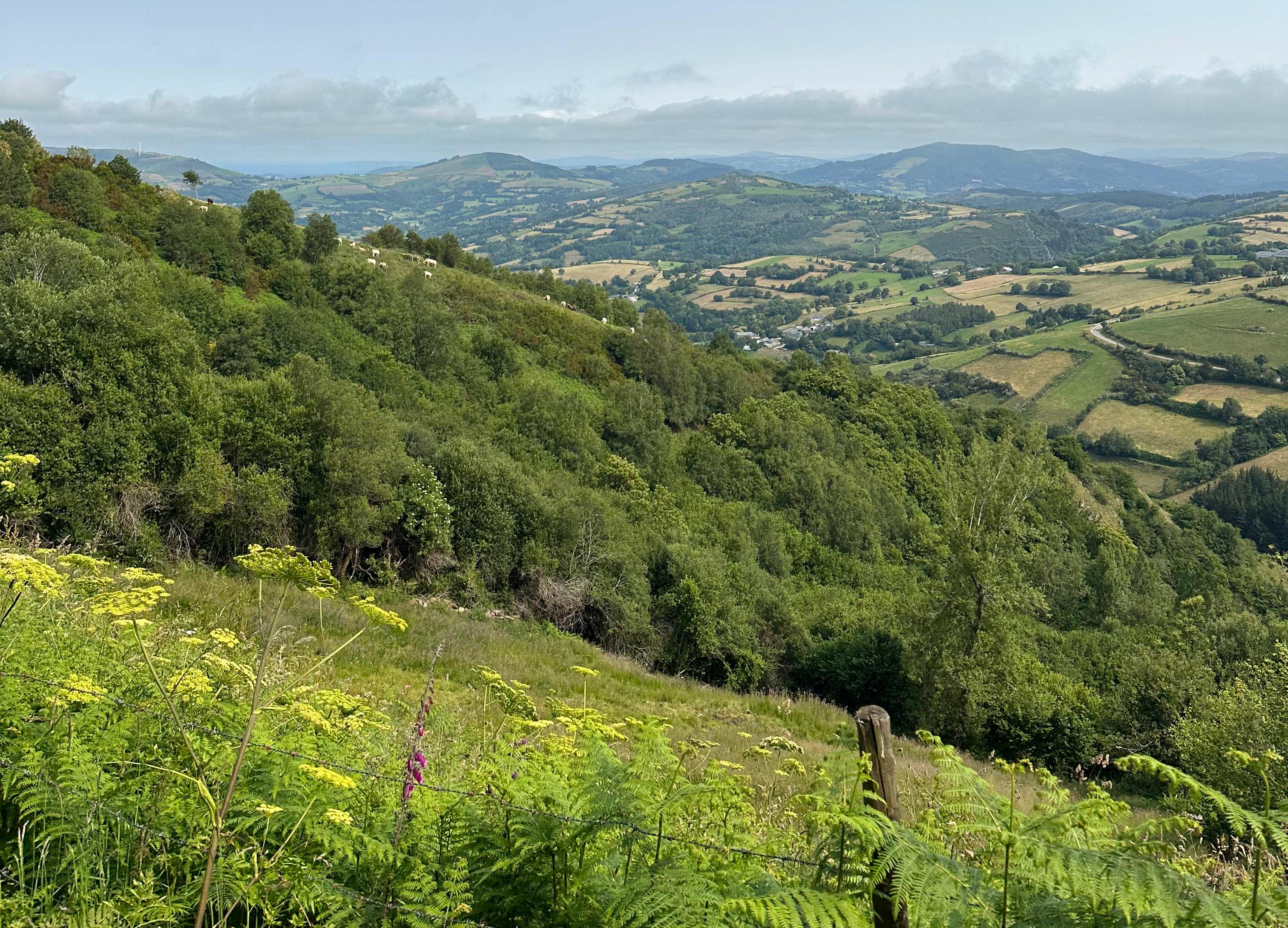
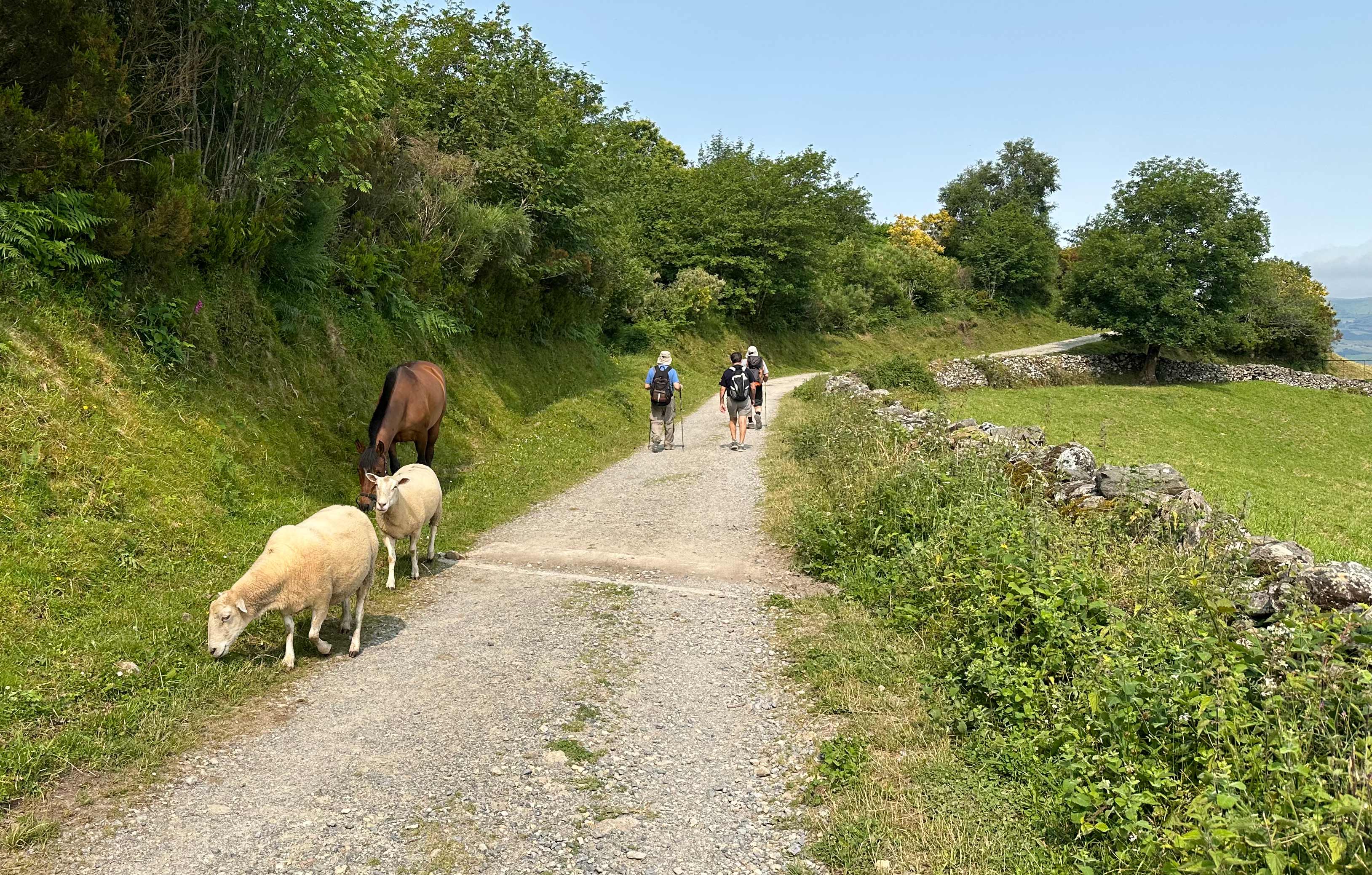

It feels great to be back in Galicia. I hike alone all day and it’s very satisfying to walk sheltered from the sun on these covered paths, some almost like tunnels, covered as they are by trees and vegetation. I’m loving every second.

New places have popped up, as the café in Filobal and here I stop for brunch number two. Yes, the rude girl, her sister and father come here too but I sit out at the back in the coolness of the garden, where I’m entertained as I eat my customary salad mixta, as a pilgrim (peregrino) from one group comes forward and impromptu sings to another group of female pilgrims (peregrinas).
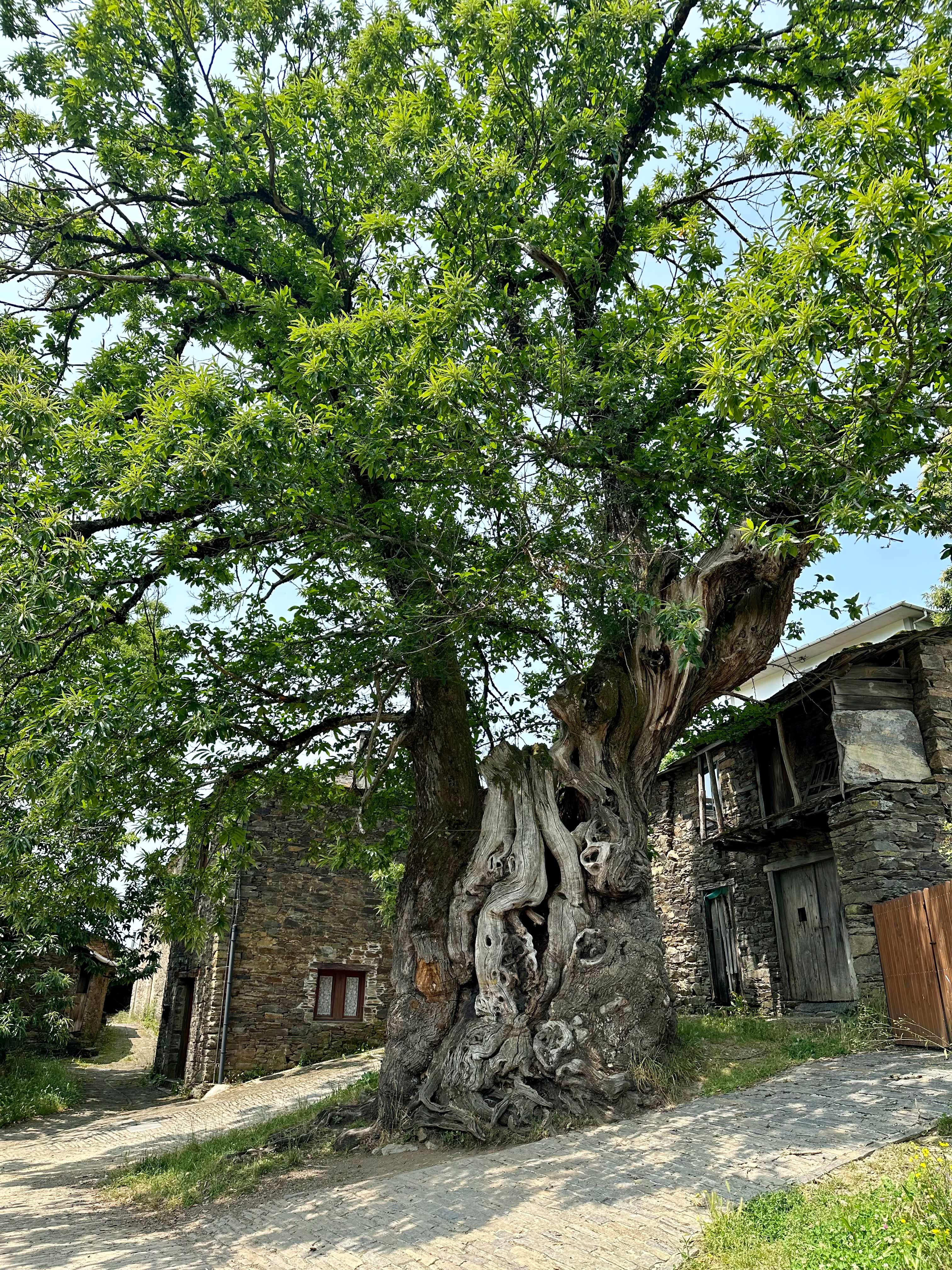
Just before Tricastela I pass the famous centennial chestnut tree of Ramil, 850 years old, according to data provided by the Superior School of Rural Engineering of Madrid. Over eight centuries are reflected in its almost nine meters in perimeter, I read. Yes, it’s a handsome old tree, and it’s impossible to walk past without taking a photo of it, standing as it is right on the path, as if to welcome pilgrims on their arrival at Tricastela.
I am happy to say that I enter Tricastela in an orderly fashion, legs intact and feeling strong. Six days of continuous hiking has paid off. This is after all a 21 km hike, mostly downhill. This small village located in the province of Lugo is a historic Jacobean place.

Tricastela means three castles, probably Celtic forts, that used to surround the city, but none of them remain. It was an important stop for medevial pilgrims and still is today, as it’s an attractive village with many lodgings. I’m staying in an old schoolhouse, beside the church, run by Jules and Sonya, a friendly Belgian couple who live themselves on the top two floors. I chose this place partly for its architectural uniqueness and partly for their communal breakfasts, and I’m warmly welcomed when I arrive.

I have dinner at Complexo Xacobea, a wonderful restaurant just down the road, where I enjoy the tastiest meal so far! My three-course pilgrim menu tonight is Caldo Gallega, a homemade vegetable soup typical of this region, which has quickly become a favourite, followed by grilled meat and sausages with two delicious sauces and a glass of red wine. Fresh fruit in crème fraiche completes the meal, and I’m one happy customer.
Afterwards, I sit outside the church in the evening sun by the river, and I don’t want the day to end just yet. Tomorrow, I hike to the city of Sarria. I didn’t stay there the last time, and can’t remember very much from when I passed through the town, so it’ll be a new experience.
Check out my earlier posts to get the full context of this pilgrimage or my latest Camino, and sign up to be notified when the next post is released.
If you enjoyed this post, please give it some love by sharing and liking it!
All photos copyright Anita Martinez Beijer © All rights reserved
The Camino de Santiago is a pilgrimage rooted in medieval origins. It leads to the tomb believed to be that of the Apostle Saint James the Greater, in the crypt of Santiago de Compostela Cathedral. The Camino was, and still is, Europe’s oldest, busiest, and most well-known route.
 Bohemialife