
Wake up early and collect my now dry clothes from the clothesline, get dressed and out of the door at around six thirty. Today’s walk is 25,6 km, but it’s the steep descent down mountainside that’s going to be the challenge.

Typical pilgrim shadow in the morning
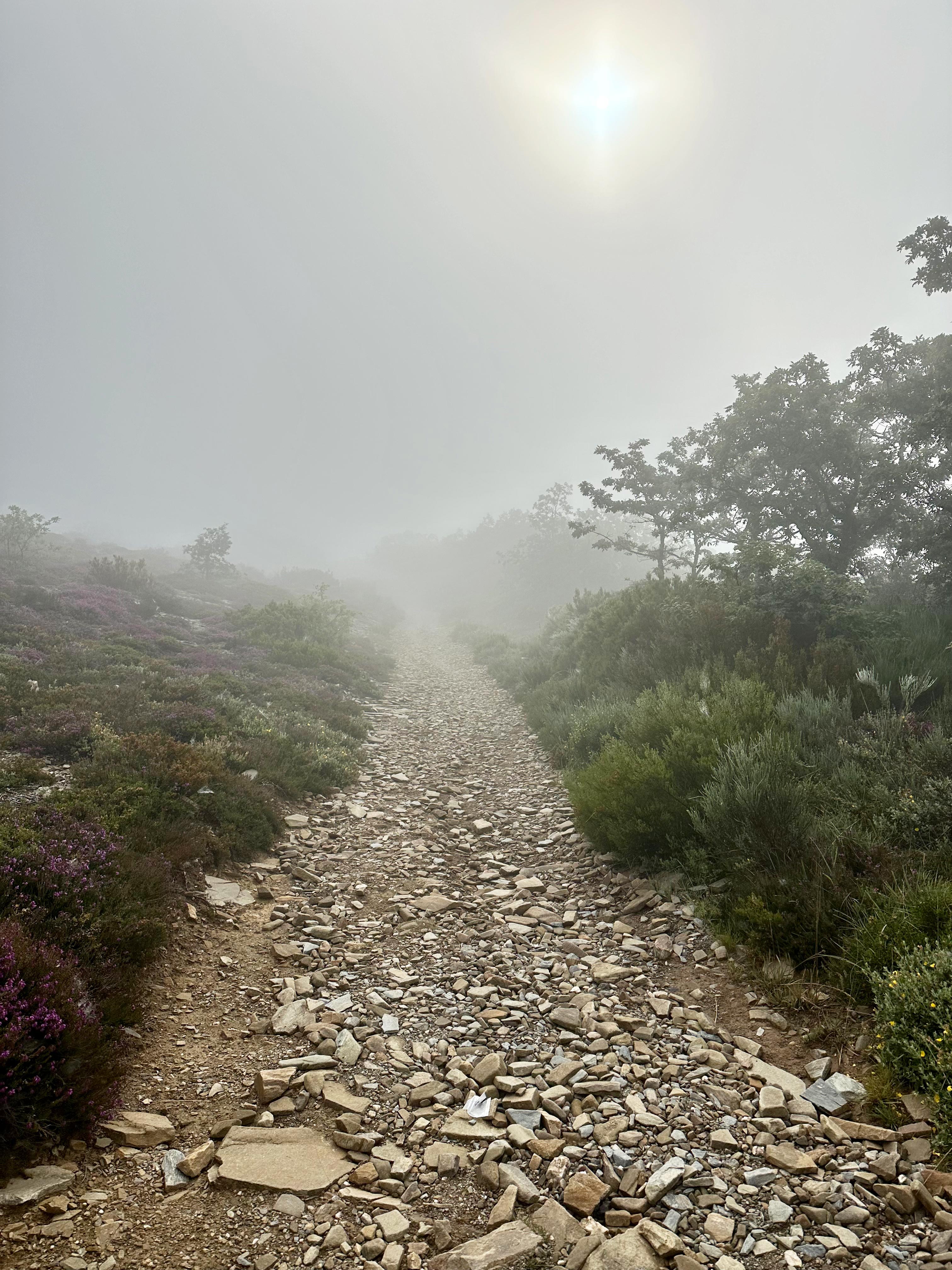
The first part is wonderfully cool and walking up the mountain is no problem at all. Beautiful nature and wildflowers and the higher I get, of course, a wonderful view, once I pass the fog.
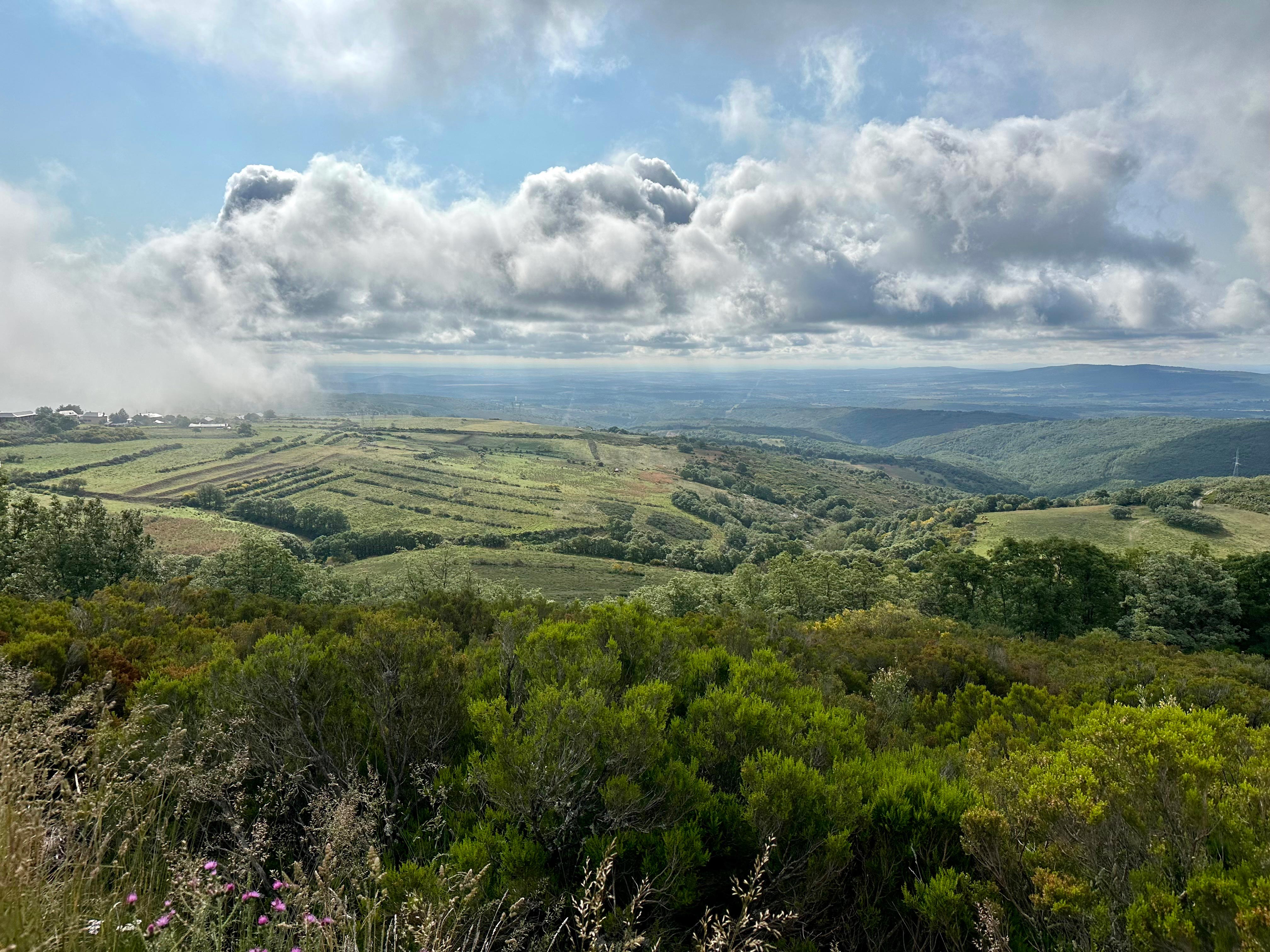

I take my morning coffee in the small village of Foncebadón, just before the peak experience for most pilgrims, the large cross, Cruz de Ferro, standing 1,504 meters above sea level on a large mound of stones and pebbles. Pilgrims traditionally leave a small stone at the Cruz de Ferro, to symbolize leaving all their burdens behind. I find myself unexpectedly unmoved by this iconic place, both physically and spiritually. Perhaps it’s because I expected it to be on the very peak of the mountain with uninterrupted views, but it’s surrounded by high pines, and the actual peak of the mountain is Alto Altar at 1551 meters, some 6-7 km further on.
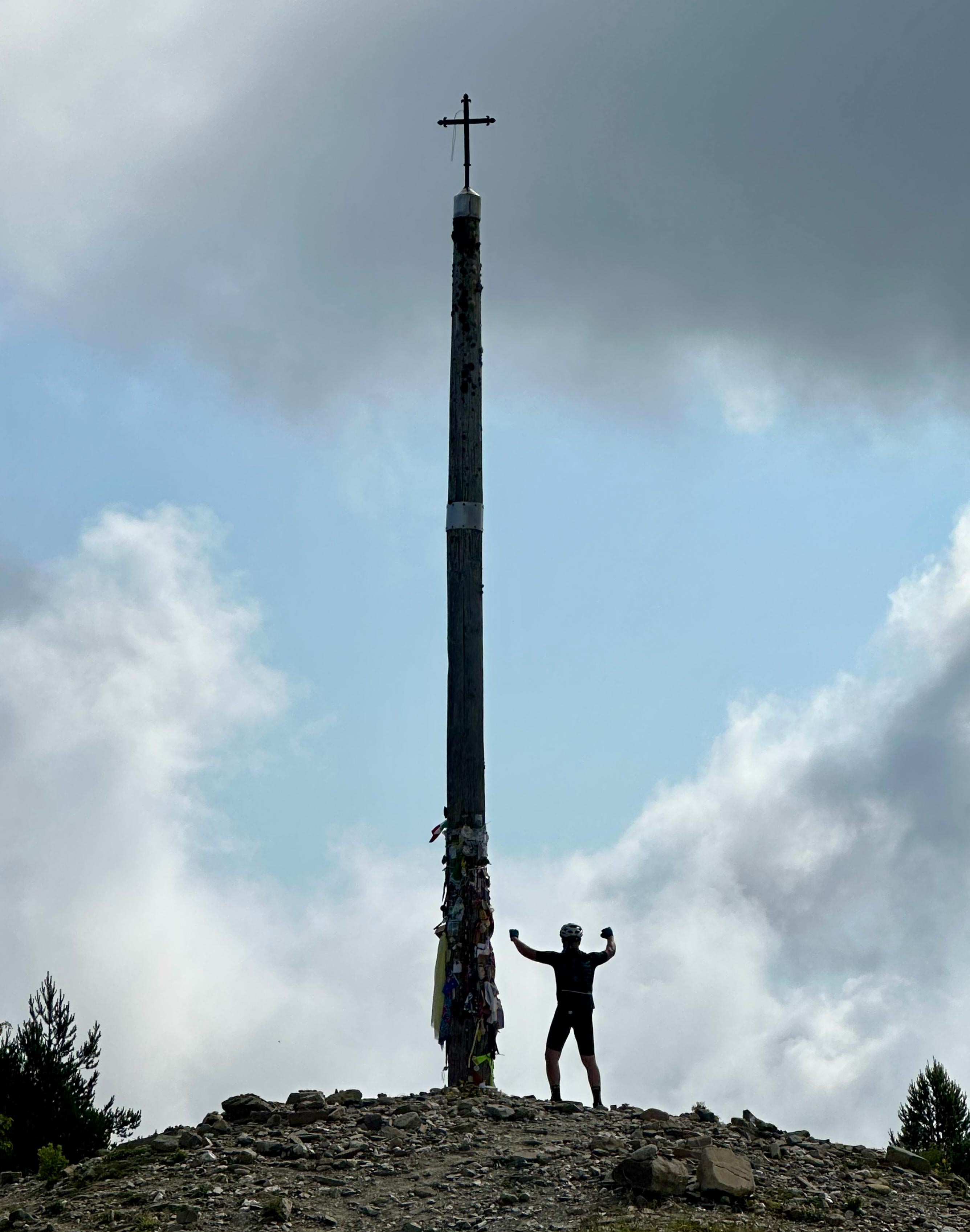
Anyway, it’s a feat to climb or cycle up any mountain and worth celebrating as the cyclist did who came after me.

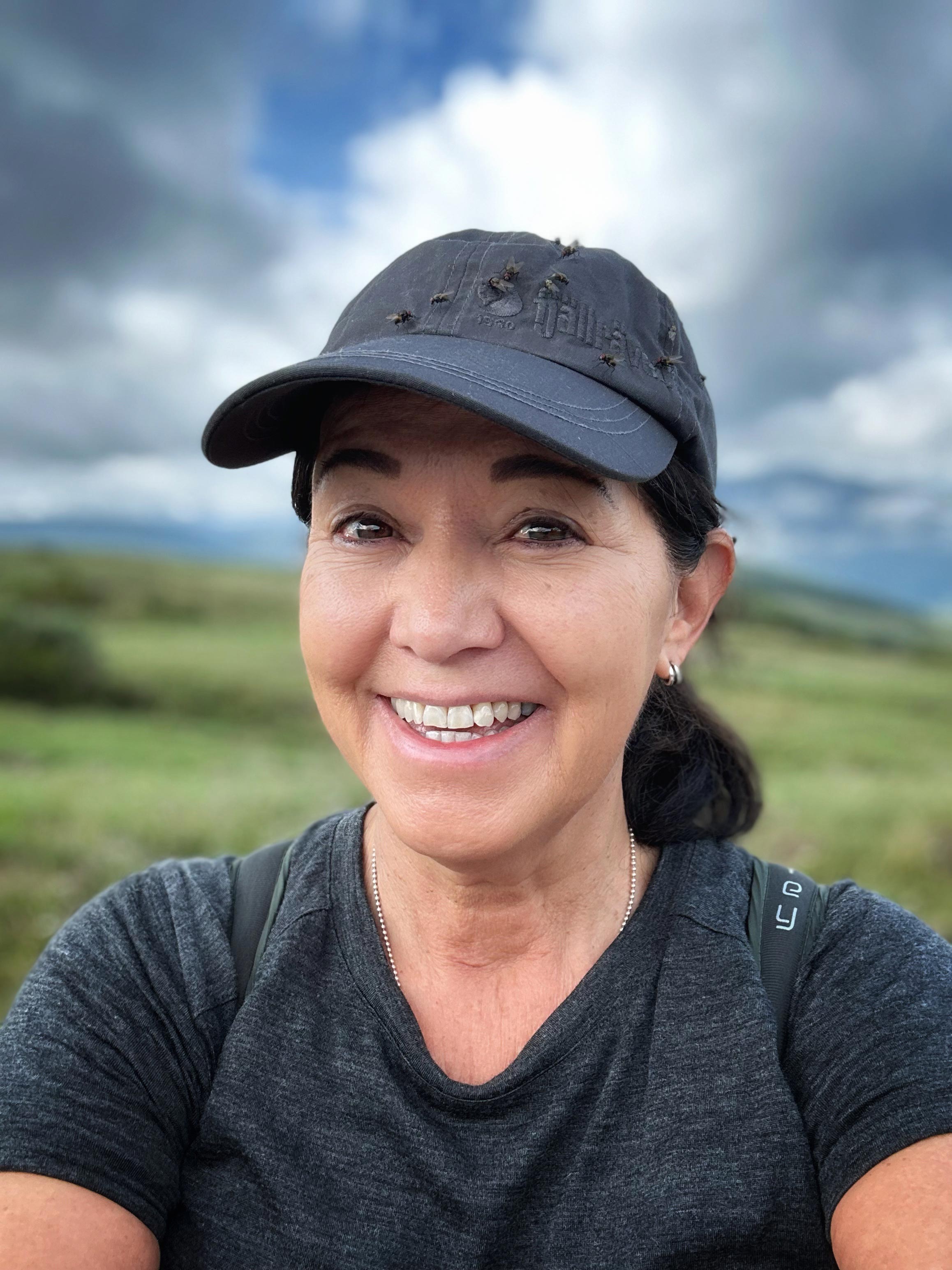
Look at the crazy amount of flies on my cap! Only on me mind you, they didn’t seem to bother anyone else.
The next stop to refresh myself is on the way to Alto Altar, run by a lovely girl from a caravan. I chat to some of the pilgrims and realise that all of them plan to stop and spend the night in El Acebo. They tell me they would be impressed if I would make it down to Molinaseca. Join the club, I have just realised that so would I…

Manjarin, the village of one (!) official resident, the ‘modern knight’ hospitalero Tomás.

Now the decent begins. Just look at this path! Gone are the more smoother surfaces and it’s littered with rocks the whole way down. As if that wasn’t enough, it’s become afternoon and getting hotter by the minute. Combined with the high humidity it quickly becomes very difficult. My feet are killing me, and my left shoulder is hurting. I somehow make it down to El Acebo in one piece, where I find a nice cool café and have a very late lunch of omelette, chips and a large salad that tastes heavenly, but it’s way past 2 o’clock and I’m done!
So, El Acebo could probably have been the place to stay. I somehow thought, in the comfort of my own home far up in the cold north with zero humidity, that I could spend the whole day strolling if I fancied, to reach my destination. Wrong. It’s agony to walk in the afternoons when it’s hot, and there is no strolling involved whatsoever. It’s a demanding hike to reach your destination for the day. What’s more is that there’s a very good reason they have siestas in this part of the world. So, I call it a day and the nicest guy called Luis takes me smoothly down to Molinaseca in his wonderfully air-conditioned taxi, and we have the best time chatting away. He tells me that it’s another two and a half hours of steep downhill walking to reach the town. It’s a no brainer, this is the best €20 I’ve spent so far.

The small town of Molinaseca is as pretty as I have envisioned, situated by a lovely river. It seems that the entire town’s youth are congregated on the two riverbanks, and I am more than grateful to join them in the shade and dip my poor feet (hello first blister) in the cool water. Bliss!
I find the advice of John Brierley to be sound: ‘Don’t push yourself at the beginning. Most injuries, strained tendons and blisters occur in the early days. It generally takes the body a week to adjust to regular walking.’
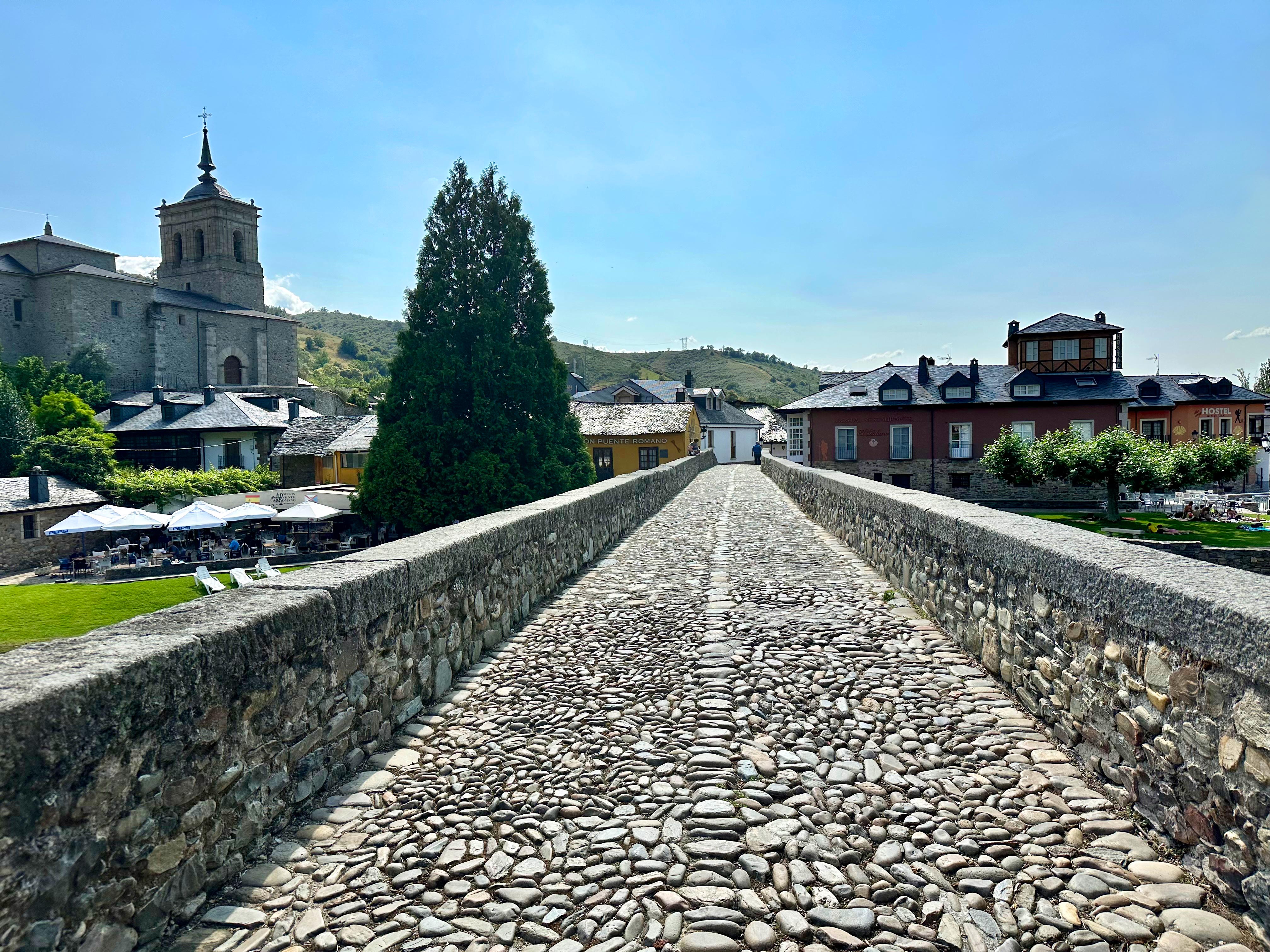
Have a quiet dinner by the old roman bridge by the riverside and reflect on what feels different so far this time from 2012. It’s only my second day on the Camino, but I think I’m missing a bit the immediate social connection I felt the last time. I only had to hop off the bus below O Cebreiro, before I was “adopted” by what I began to call “my own John the Scot”, having read Shirley McClain’s book Camino shortly before. She had a John the Scot who kept showing up to help her along the way.
Anyway, my John the Scot had brought one of his grandchildren with him on the Camino this time. It was his third or fourth time, and he always started from O Cebreiro. We shared a taxi up the mountain, and for that I was grateful, because I had spent the night at the airport in Barcelona and hadn’t slept a wink. At dinner time I was invited over to their table and this friendship continued as we kept bumping into each other on the Camino and more pilgrims joined us after a short while. I have chatted with fellow pilgrims along the way who were all very nice, but that special pilgrim community feeling isn’t quite there for me yet.
So, I guess early mornings mean early nights, and I find myself tucked up at 9.30 sharp. Hopefully I’ll be able to leave early, as it’s predicted to be even warmer the next day and it’s also going to be a 30 km walk. Wish me luck!
Check out my earlier posts to get the full context of this pilgrimage or my latest Camino, and sign up to be notified when the next post is released.
If you enjoyed this post, please give it some love by sharing and liking it!
All photos copyright Anita Martinez Beijer © All rights reserved
The Camino de Santiago is a pilgrimage rooted in medieval origins. It leads to the tomb believed to be that of the Apostle Saint James the Greater, in the crypt of Santiago de Compostela Cathedral. The Camino was, and still is, Europe’s oldest, busiest, and most well-known route.
 Bohemialife